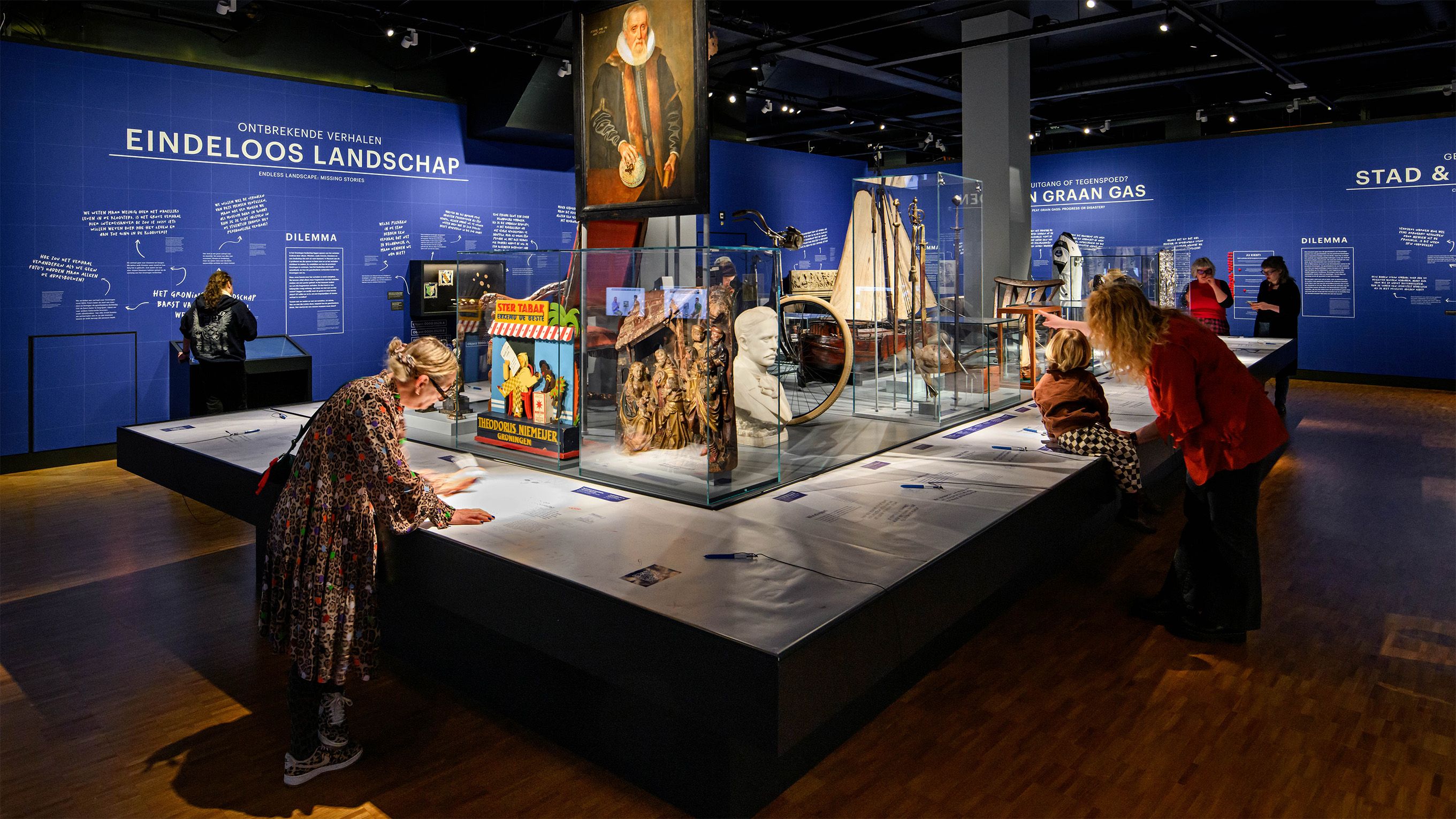
Who writes history?
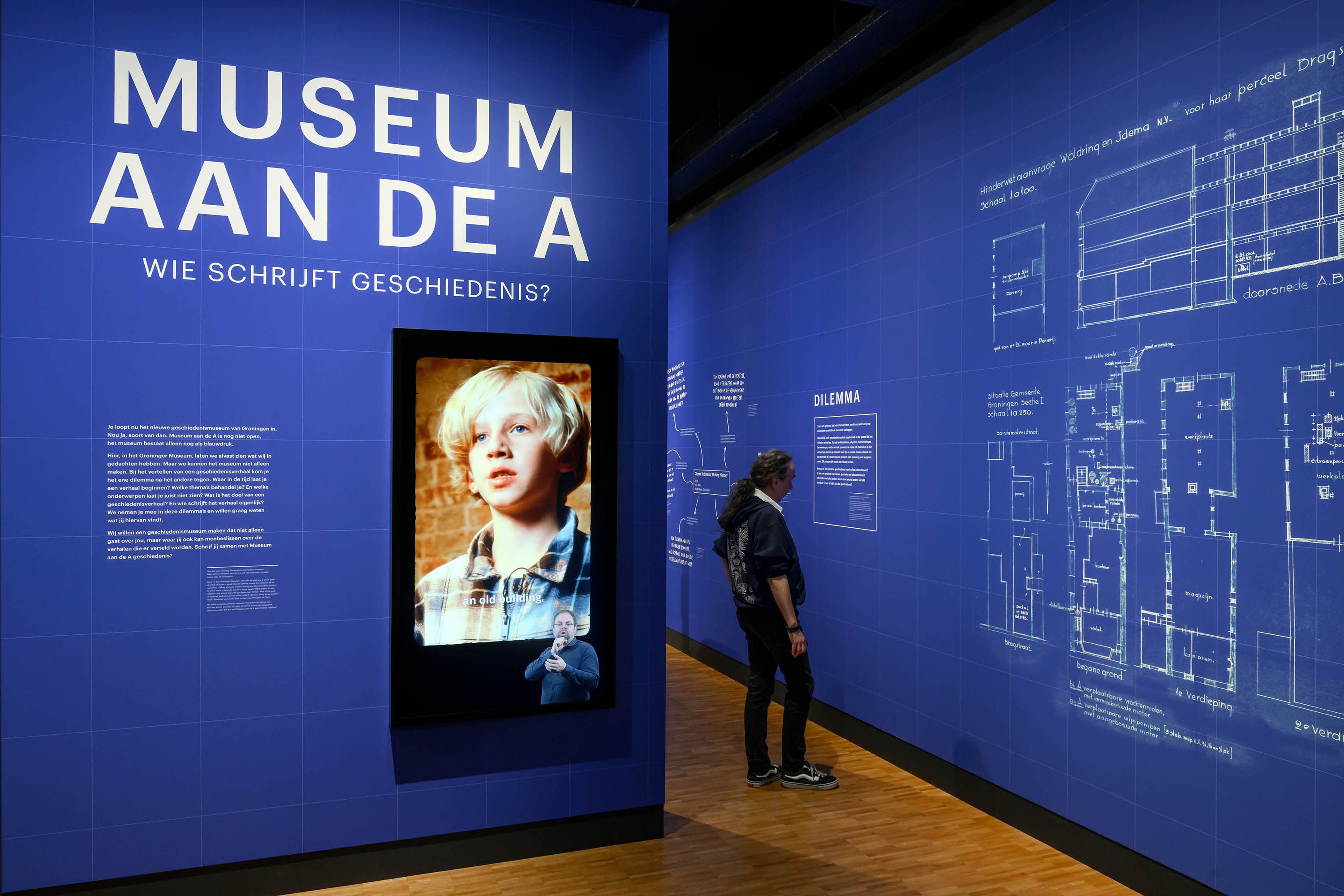
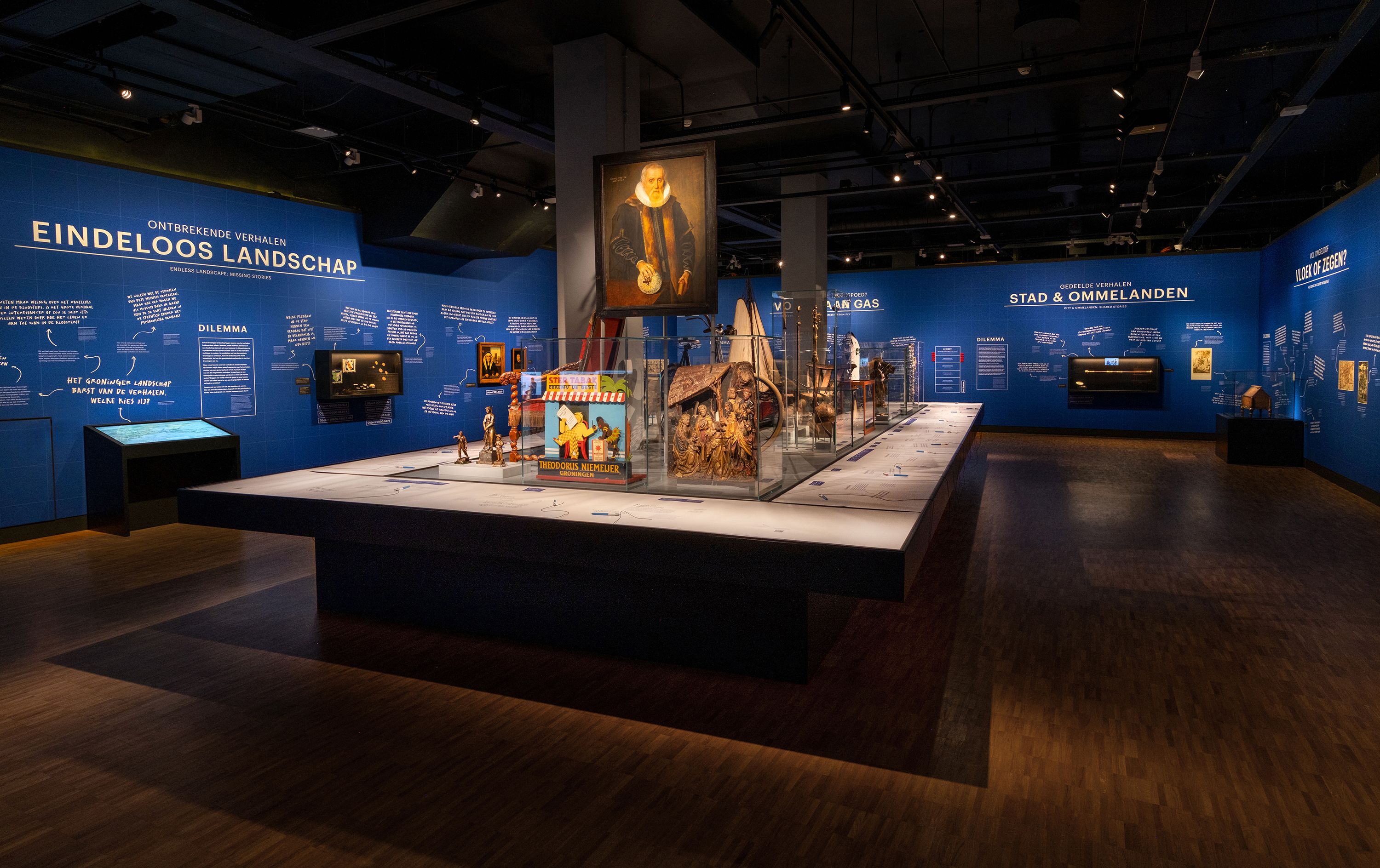
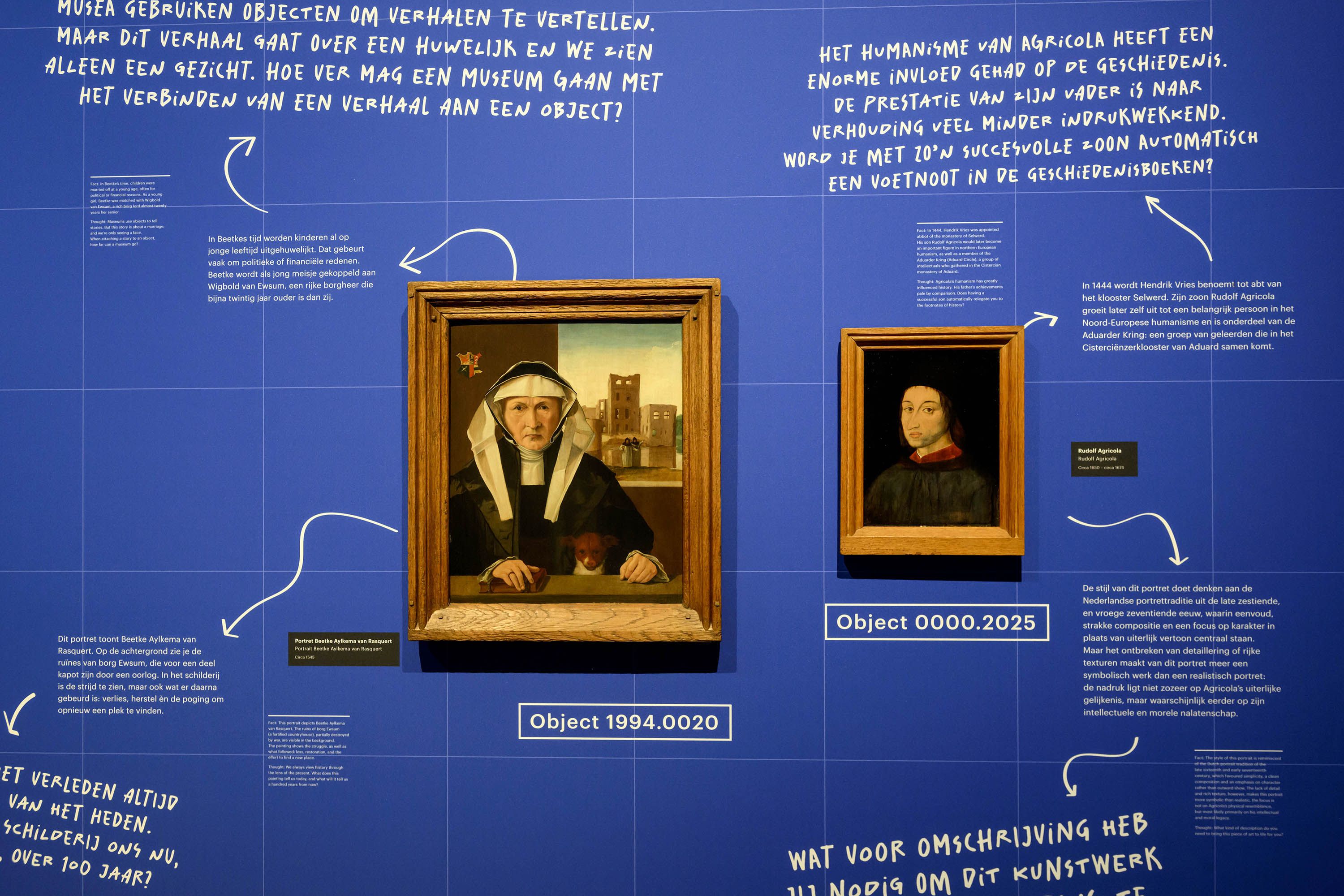
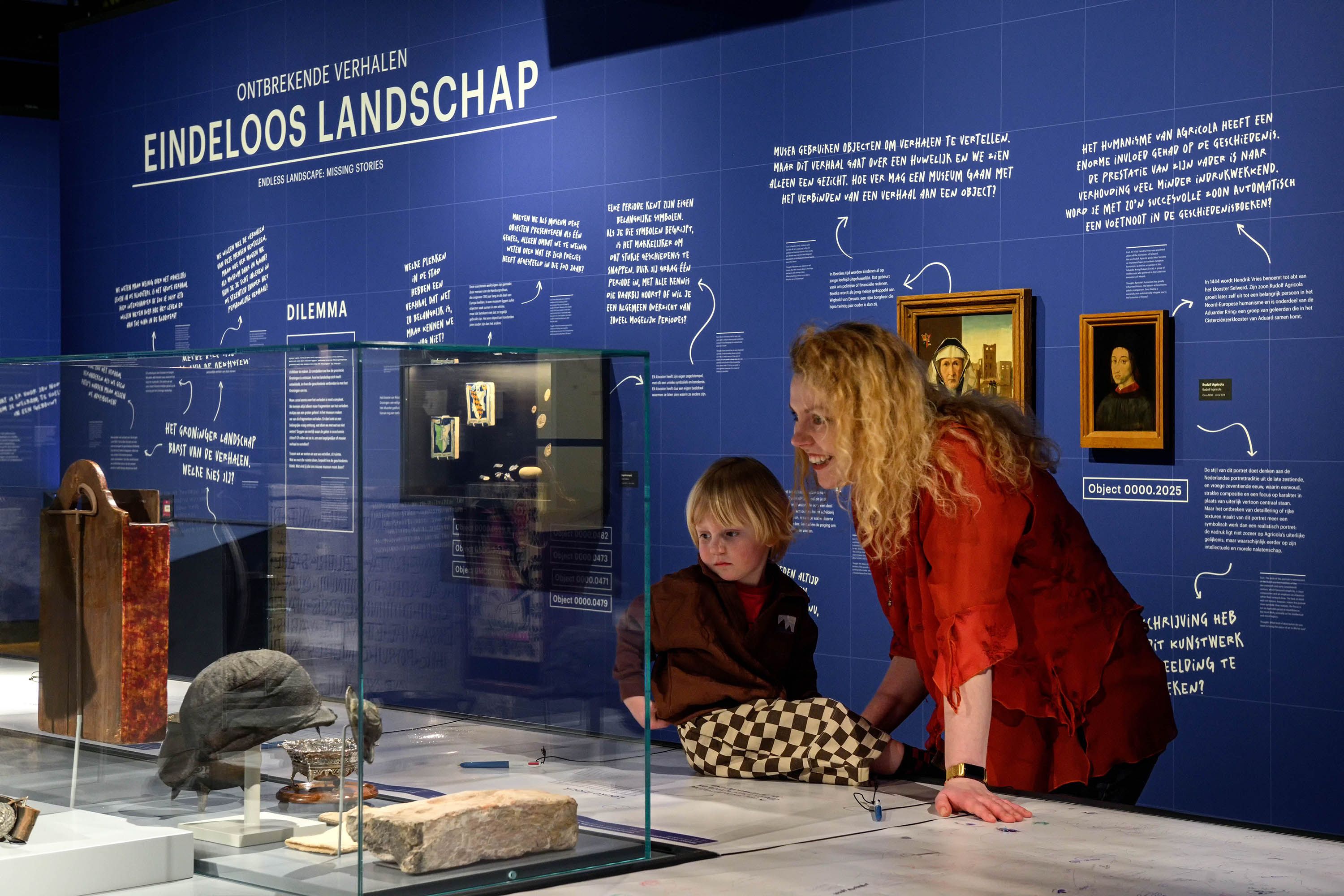
What does history look like while it's still being written? That's the question Museum aan de A put to visitors in Who Writes History?, a pop-up exhibition about the history of Groningen. Together with Museum aan de A and its partners, we built a set of interactive installations that turn the region's history into living, data-driven stories, drawing on historical archives, museum collections, and live data from across the city and province.
What we provided
History is never finished
Groningen's history lives in archives, museum collections and government databases. The challenge was to bring all of this together into stories that enrich the physical exhibition, and to use live data like water levels and traffic flows to show that history isn't fixed. It's constantly being made.
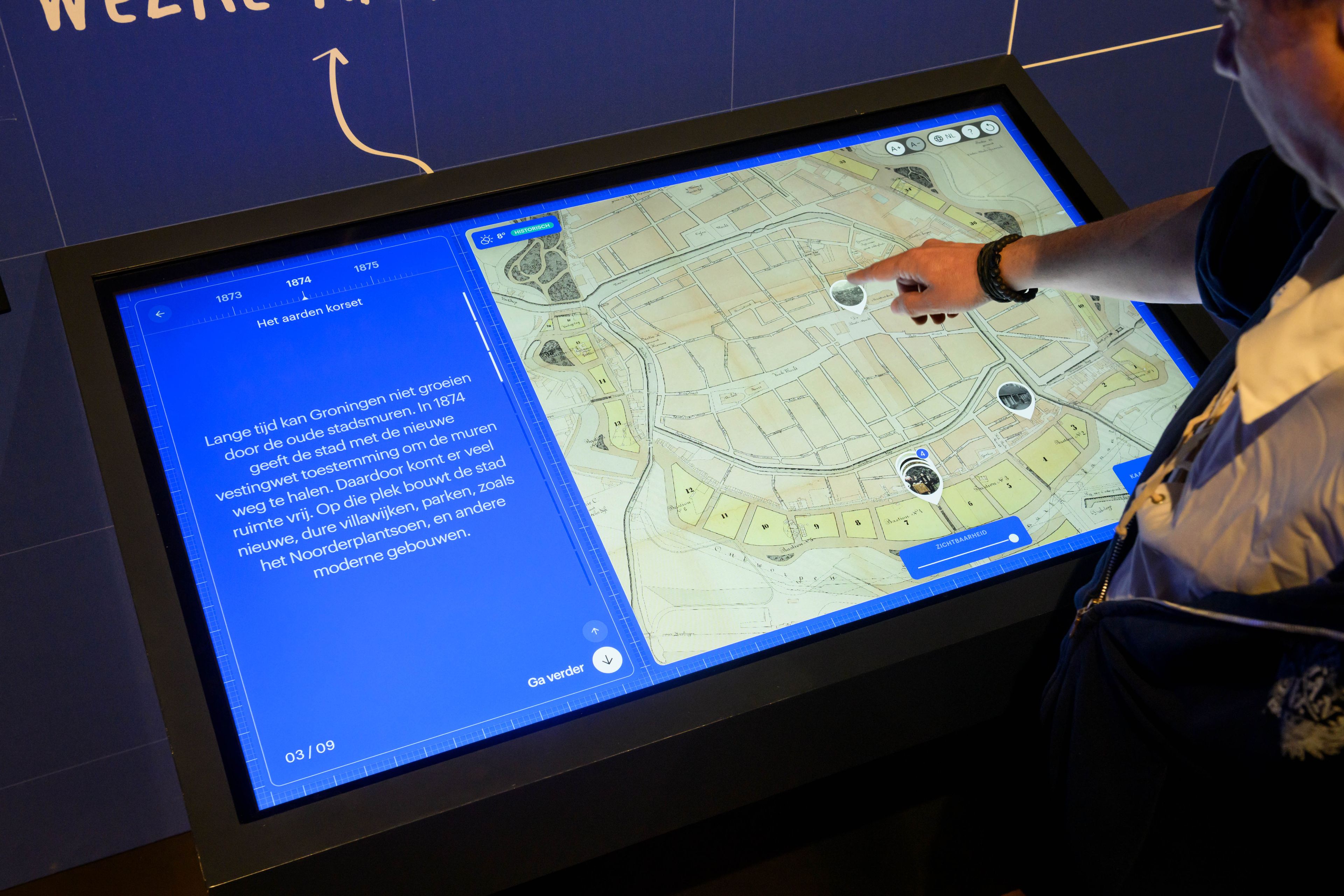
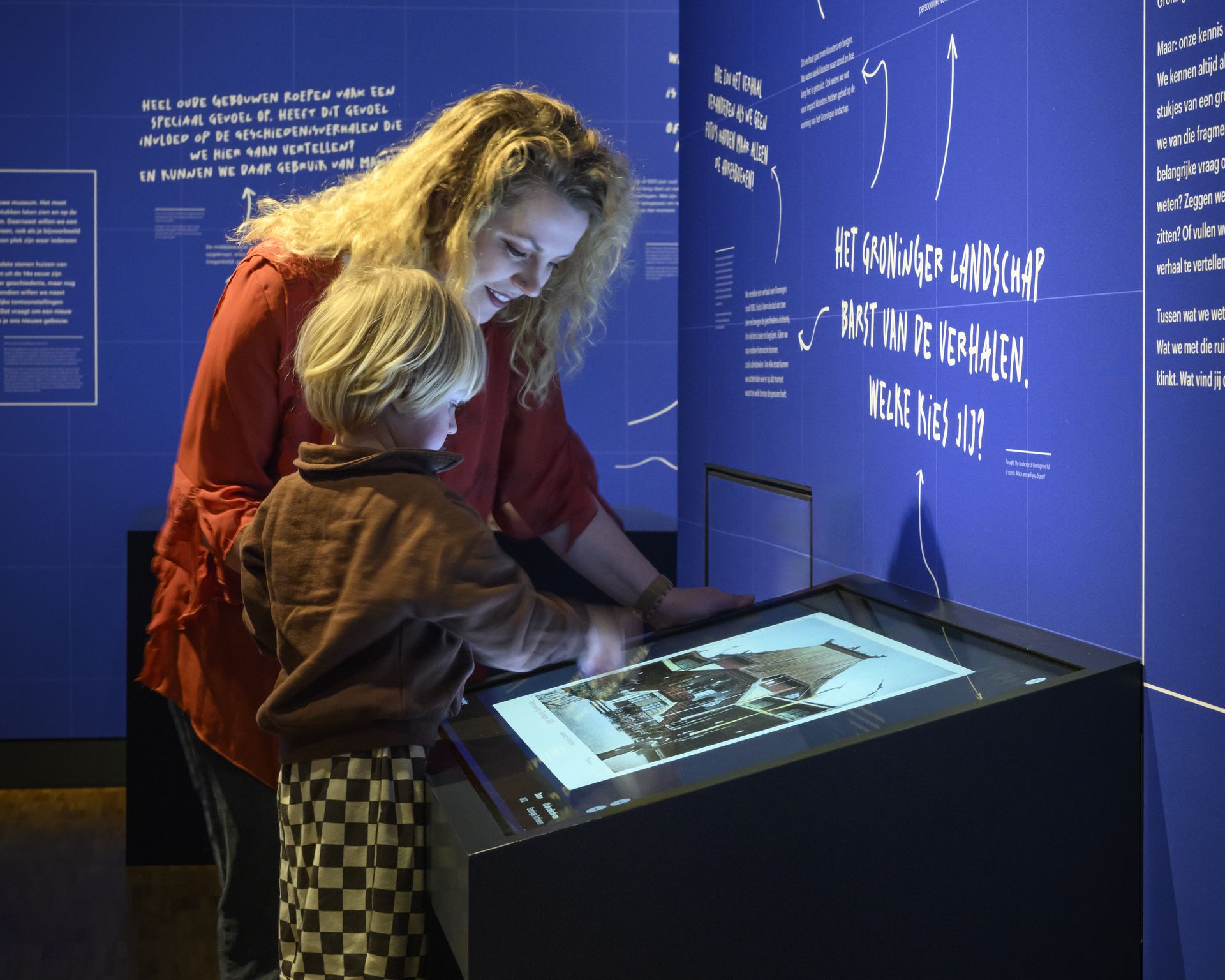
An interactive historical atlas
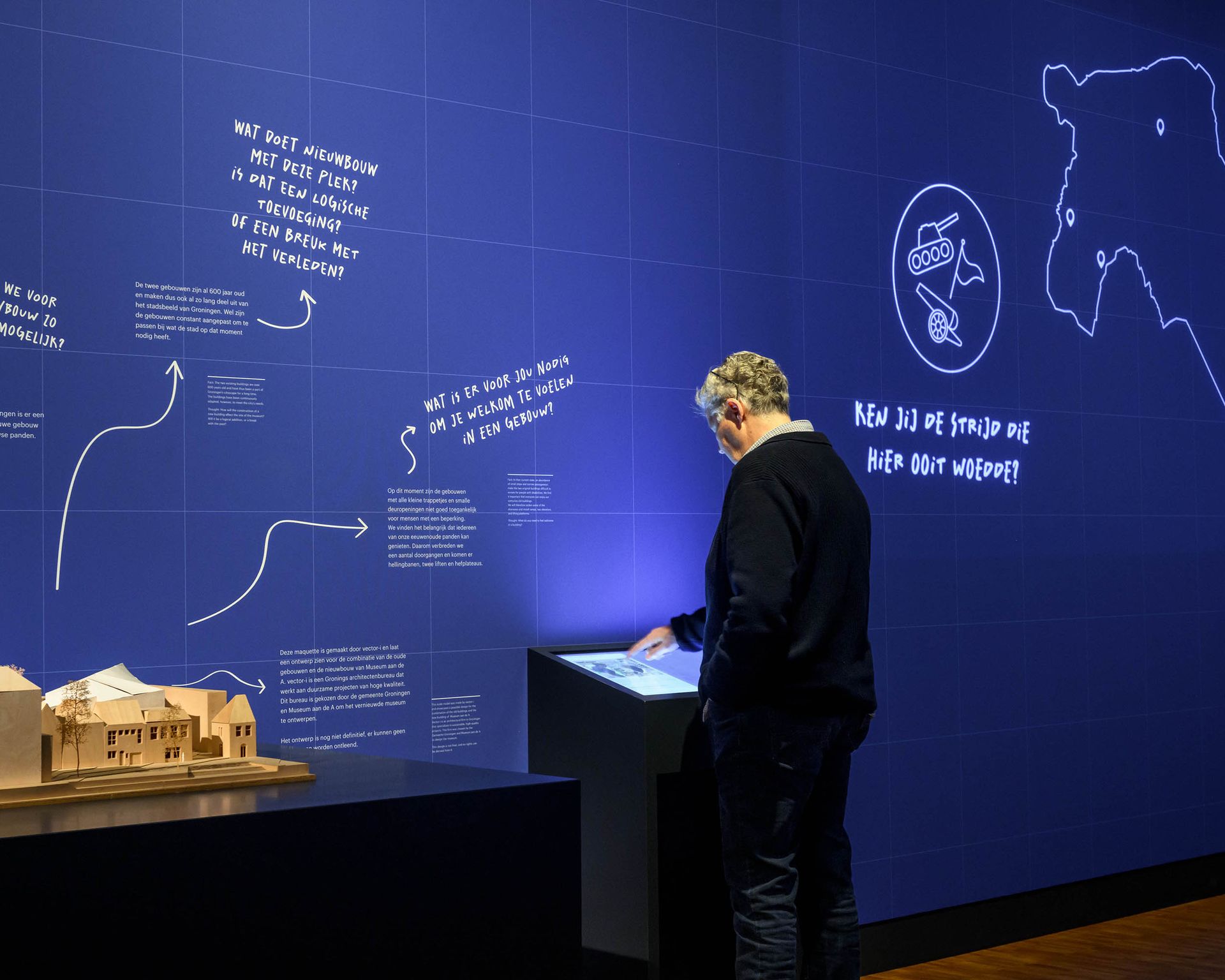
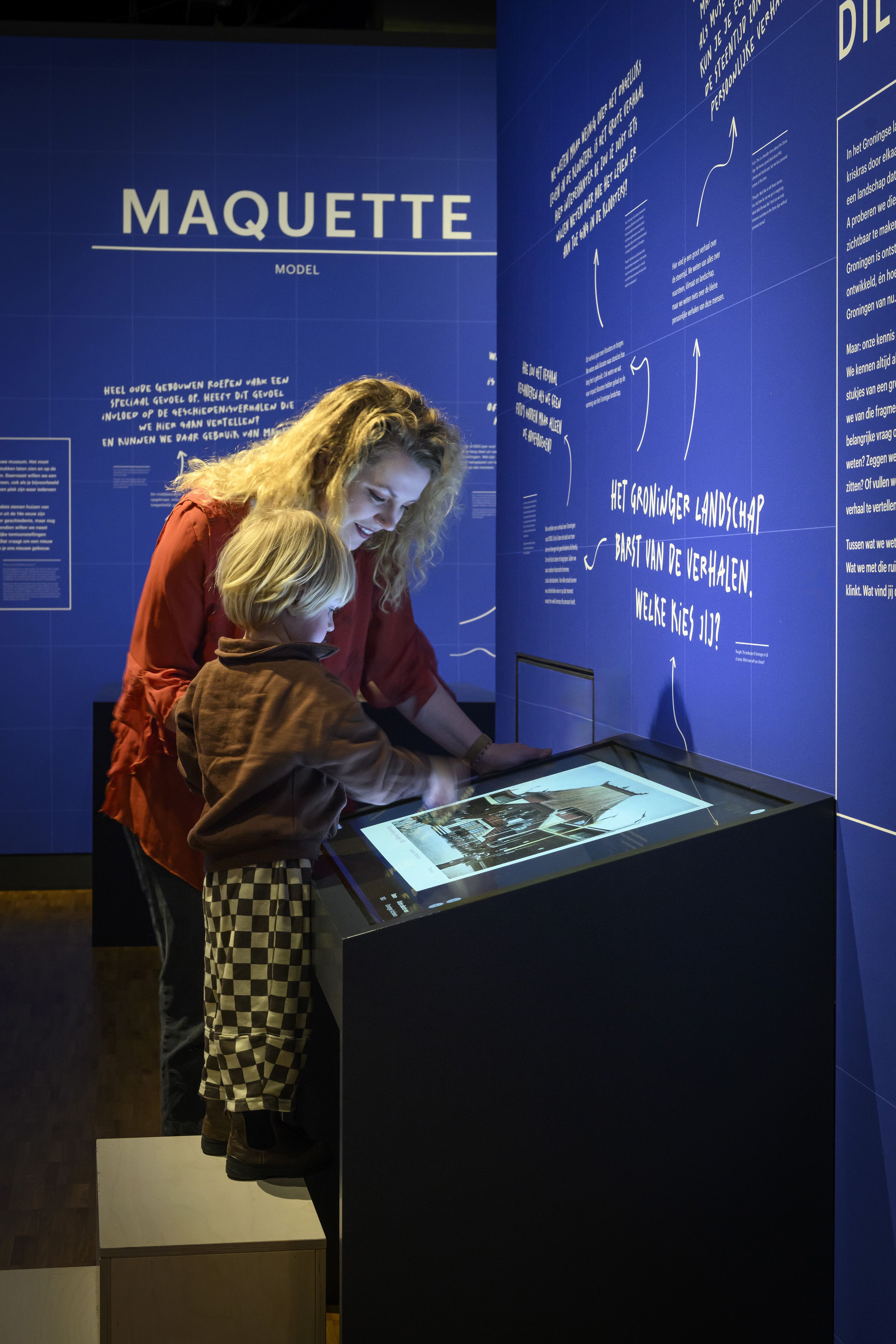
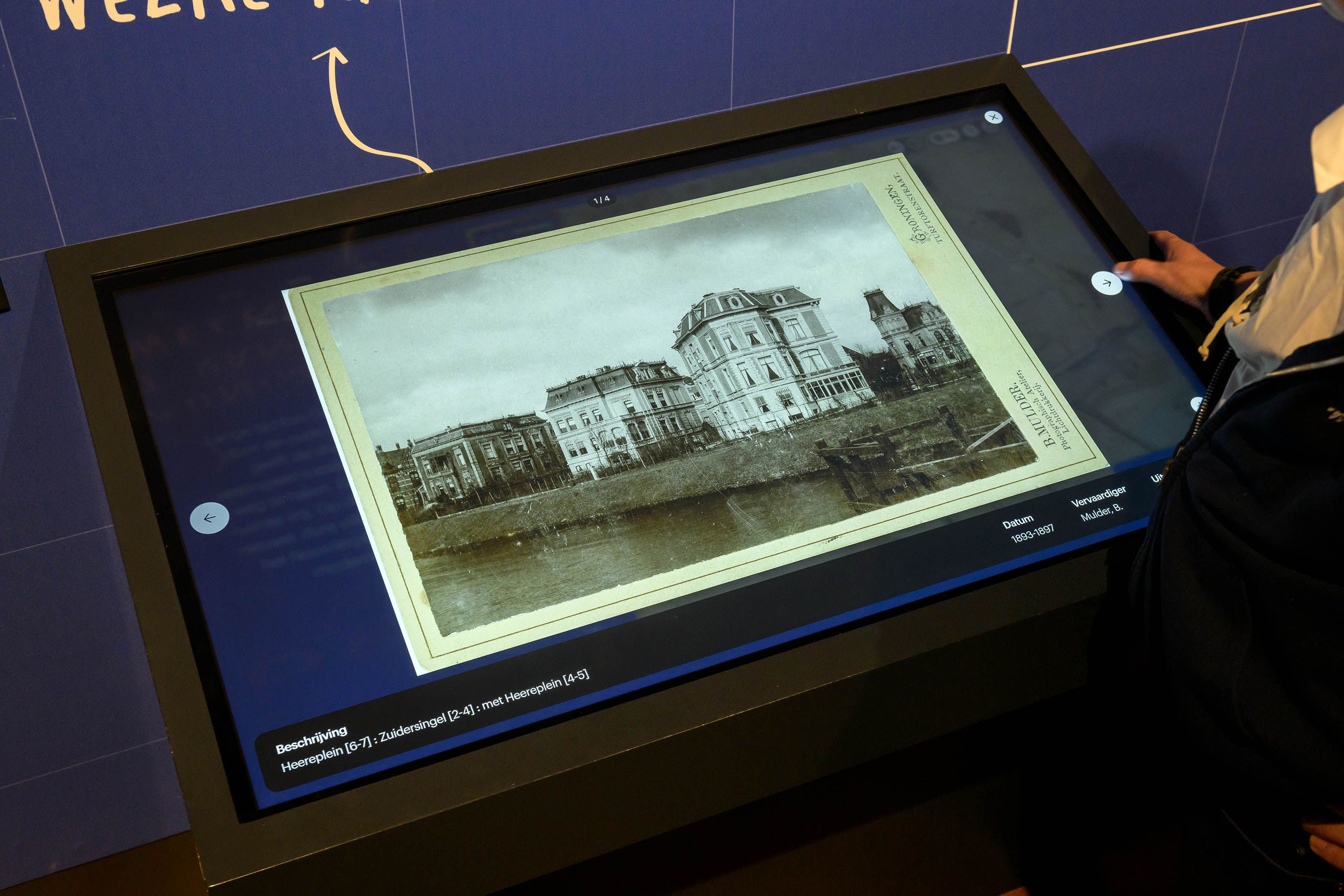
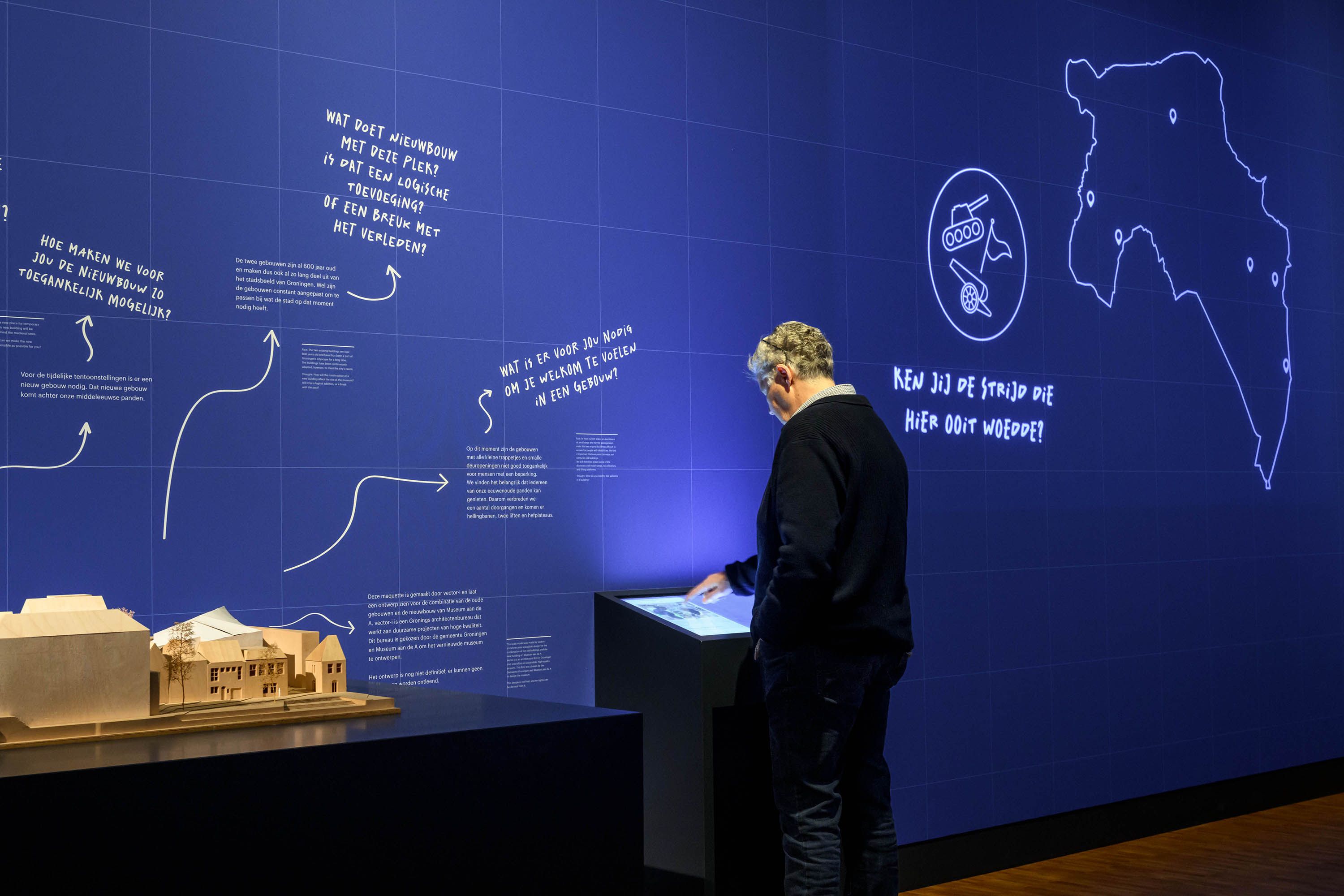
A touchscreen station works as an interactive historical atlas, showing how Groningen developed across time periods and themes. A wide range of sources is translated into clear, consistent visualisations on the map, curated so the stories stay accessible and structured, and styled to extend the exhibition's blueprint look.
Three views anchor it: prehistory, where flint finds and paleogeographic maps show why people first settled here; monasteries and estates, mapping where they were built and how they shaped the landscape; and the modern city around 1900, combining Groninger Archives photographs with sources like address books.
The formats are reusable, a flexible foundation for new stories in the museum to come.
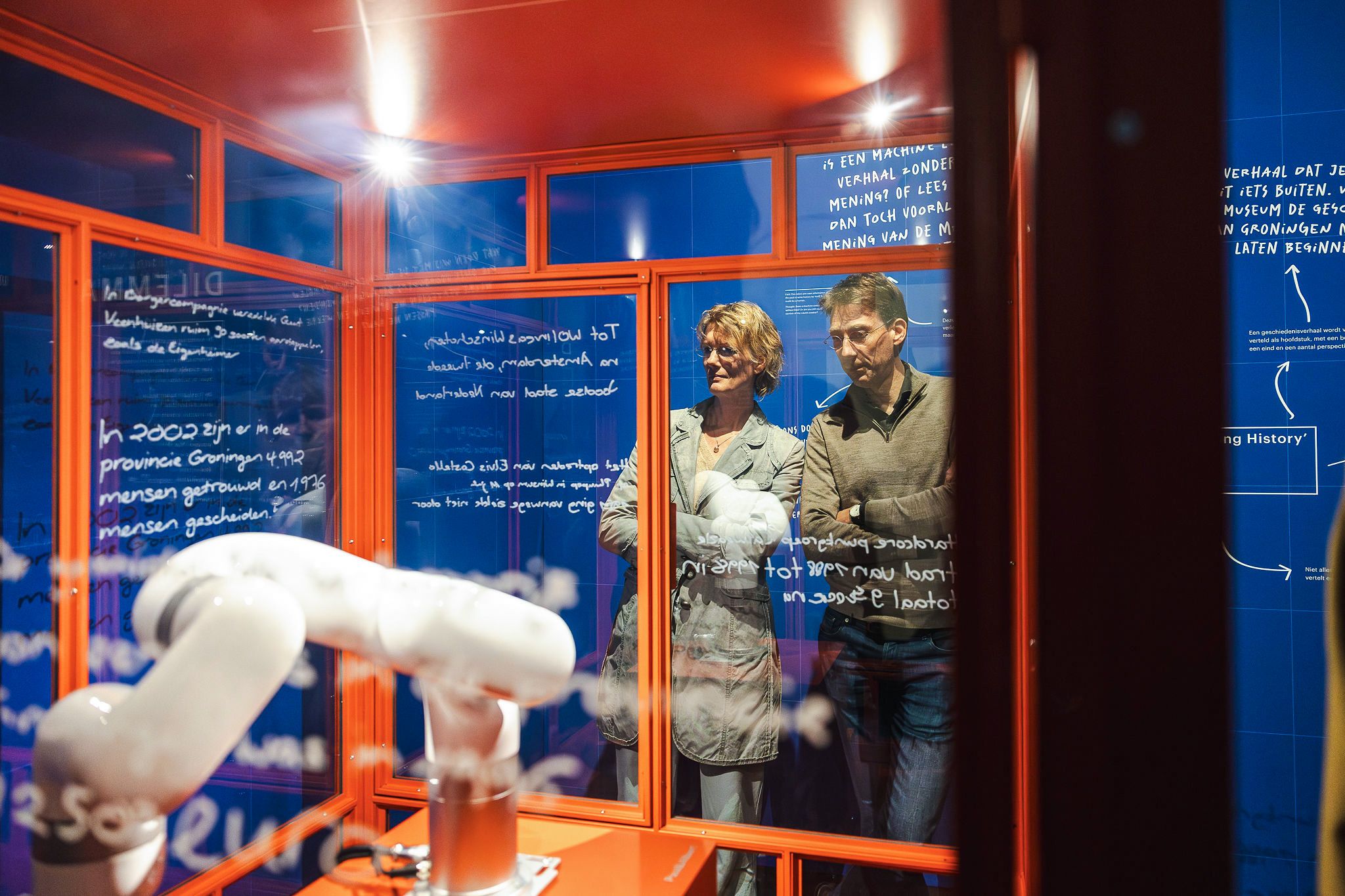
Writing History, a robot that rewrites the past
Writing History, an installation by Paul&Albert, is an industrial robotic arm that writes and erases history inside a glass vitrine. It draws on historical facts about Groningen, enriched with live data and illustration, so the present continuously turns into the past in front of you. It asks the exhibition's central question out loud: who actually writes history?
Tapart built the data feed and management system behind it, combining the archival datasources with real-time data such as water levels, traffic flow and weather.
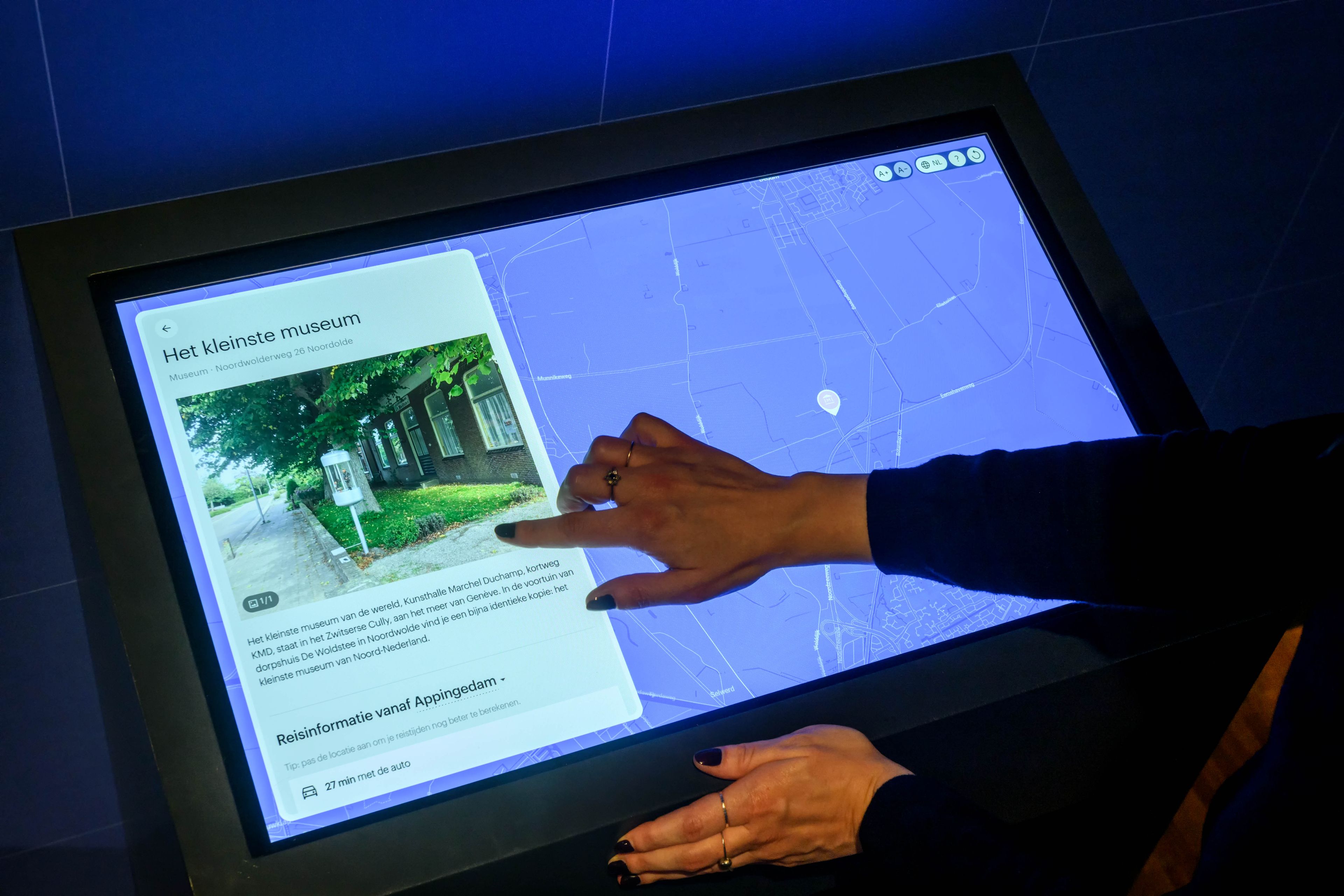
A portal to the region
Museum aan de A will act as a portal to the museums and cultural sites across the Groningen region. This installation is an interactive map that promotes those sites, combined with an illustrated map projection on the wall beside it that draws visitors in. In the permanent museum to come, the portal will build on the themes of the main exhibition, surfacing sites across the province connected to each one. The aim is to send visitors out to discover those places, and those themes, in more depth for themselves.
The data hub that powers it all
Groningen's history is scattered, across archives, museum collections, government databases, and real-time data streams from the city and province. Behind the installations, we built a data hub that connects these external sources and turns them into something the installations can use. The hard part wasn't the data itself, but making it understandable and tangible, so visitors could feel how varied history is and how it keeps moving. The hub is built to be reusable and scalable, ready to carry new stories into the future Museum aan de A.
The collaboration with Tapart is defined by technical expertise and mutual trust in each other’s knowledge. Together, we developed a museum application that is both conceptually strong and thoughtfully designed in practice.
Team
Content Design
Exhibition Design
Exhibition Build
IRIS vormgeving
Lightning Design
Interactive Media
Tapart
Robotic Installation
Paul & Albert
Tapart
Cases
Stories worth exploring
- 2023
- Museum
- Utrecht, The Netherlands
An immersive journey in the night
- 2024
- Museum
- Riyadh, Saudi Arabia
The British Museum, in your pocket
- 2022
- Museum
- London, United Kingdom