
Hanze Walk of Fame
What if a city could be shown to you by the people who know it best? That's the idea behind the Hanze Walk of Fame: a growing series of podwalks through Hanseatic cities across Europe. Together with iGlow, we built a web app where famous residents of today tell the Hanseatic history still written into the streets around you.
What we provided

A walk that unfolds as you move
The Hanseatic cities were the cultural and economic heart of Europe in the Middle Ages. For four hundred years, around 200 cities traded together across the seas in the first cargo ships of the age, the Cogs — and that trade brought lasting prosperity. The Hanze Walk of Fame opens that history up where it actually happened: in the streets themselves.
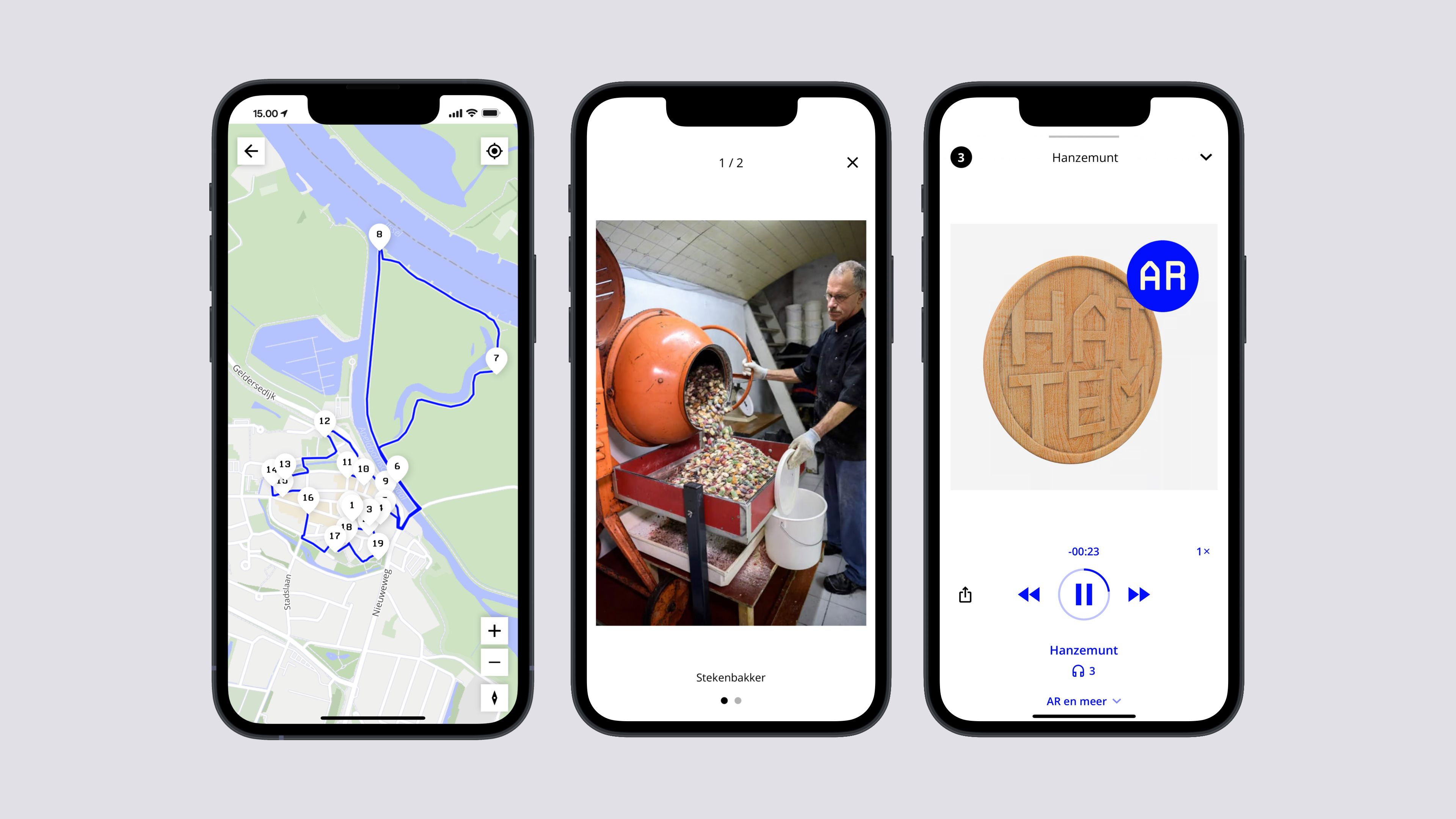
Each route is a podwalk, an interactive walking tour of around four kilometres that takes about an hour. As you walk, audio stories unlock automatically at the places they belong to, triggered by GPS and geofences along the trail. An interactive map keeps you on course and marks each stop, so you can keep your eyes on the city while the story finds you.
Guided by the city's most famous residents
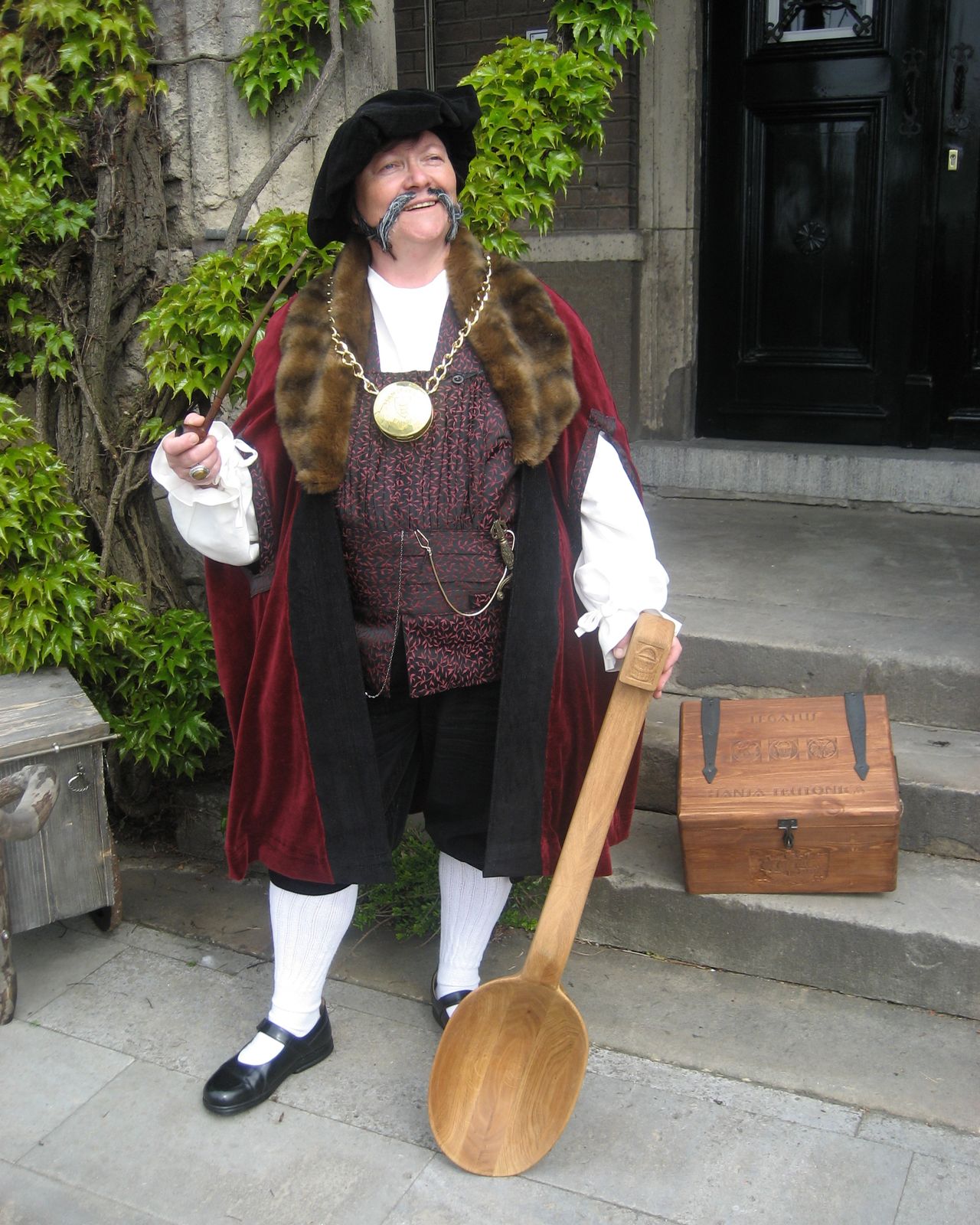
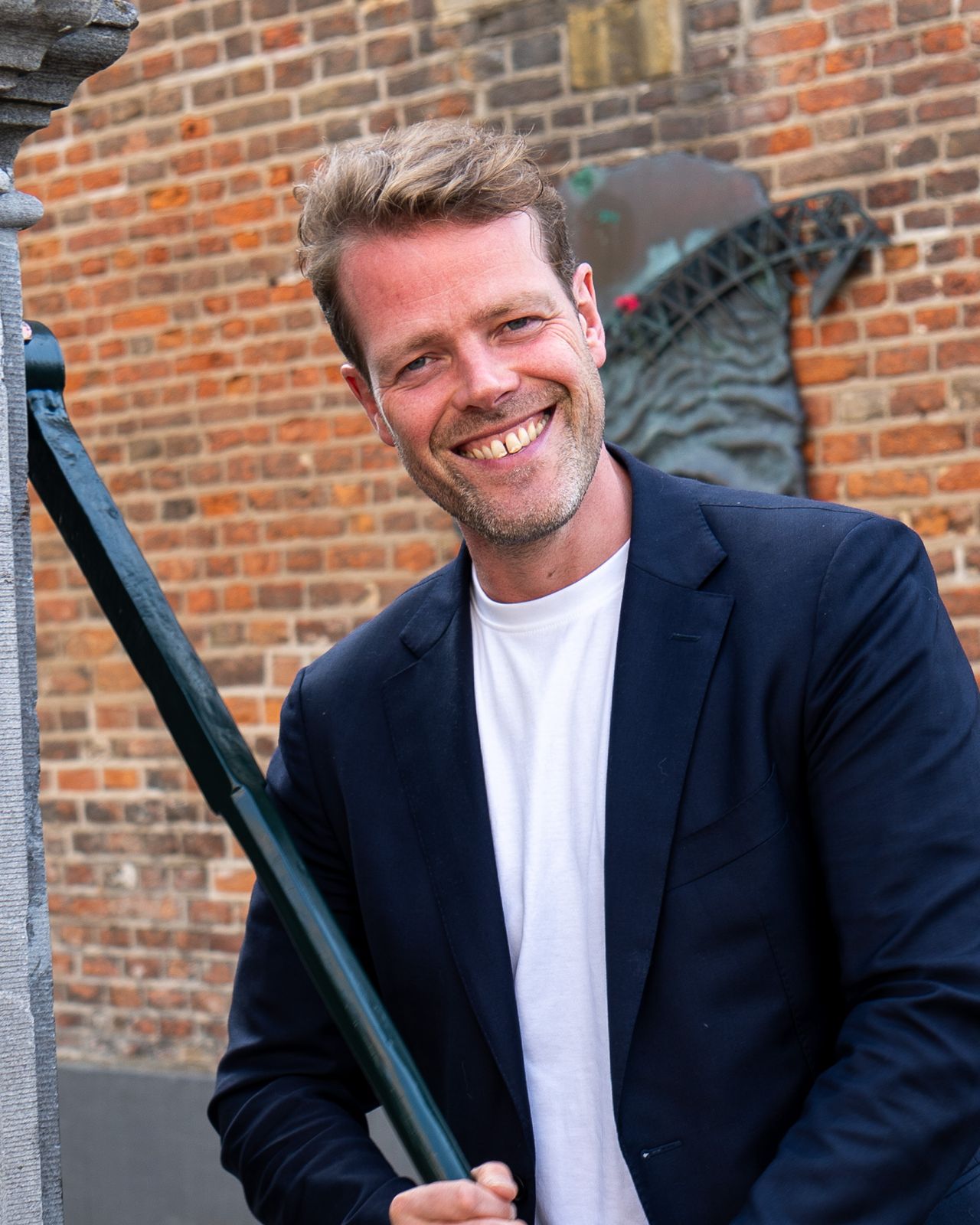
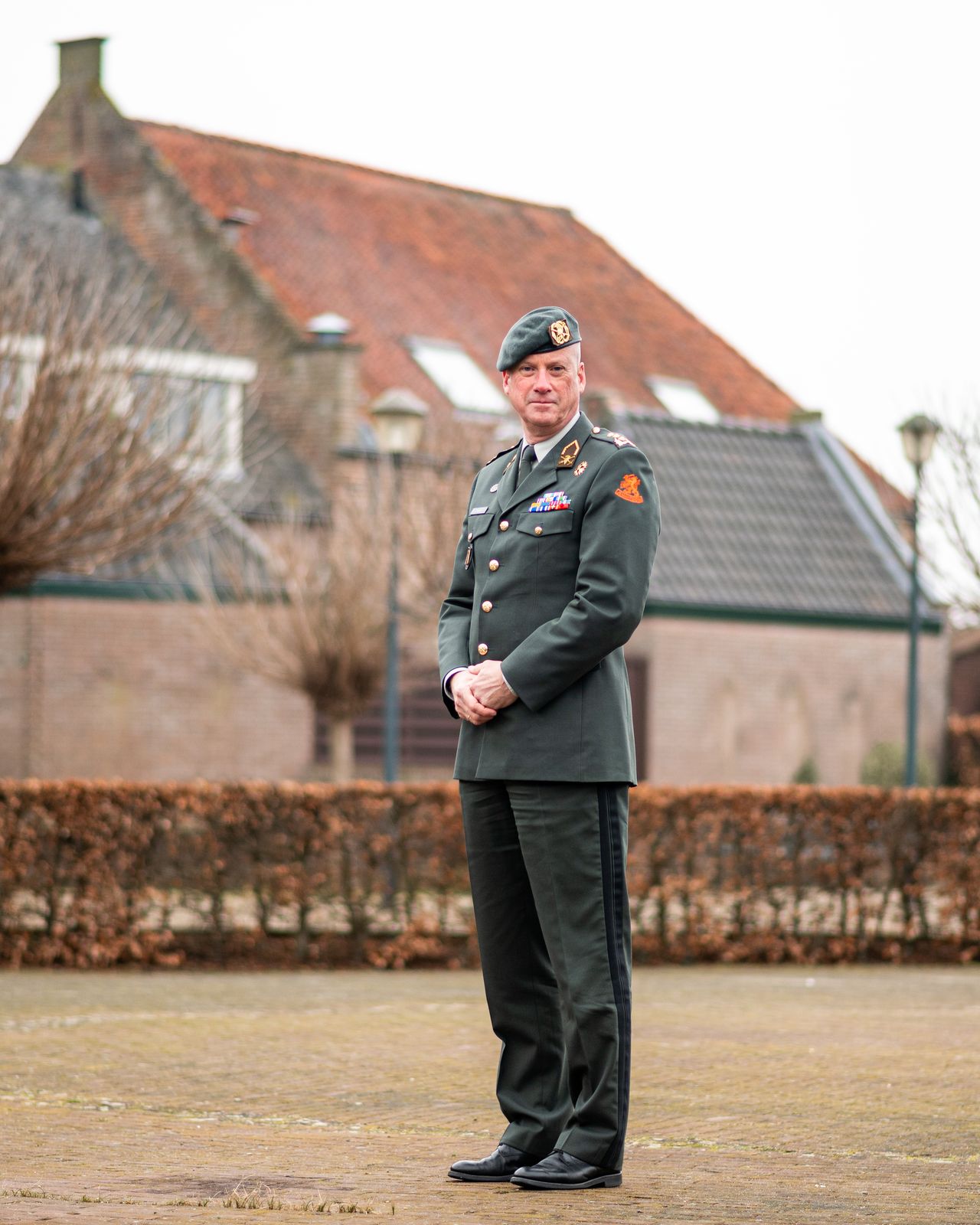
History feels different when it's told by someone with a real connection to the place. In each city, the Hanseatic past comes through the voices of well-known locals — people raised or still living there — who share stories tied to the exact spot where you're standing.
The grandson of illustrator Anton Pieck shows you the museum dedicated to his grandfather. TV journalist Margje Fikse takes you out to the Hoenwaard. Former education minister Arie Slob tells the story of medieval school reformer Johan Cele in front of his own home, while Eleven Cities Tour winner Reinier Paping talks about his sports shop in a centuries-old building. Mayor Peter Hinze recalls sailing through Europe on his parents' ship as a boy, and longtime resident Mrs. Lorenz stands before the shop her family had run for generations, remembering the wartime bombing she lived through as a child. The walk connects the trading spirit of the Hanseatic cities then with the people who carry it now.
Rebuild the past in augmented reality
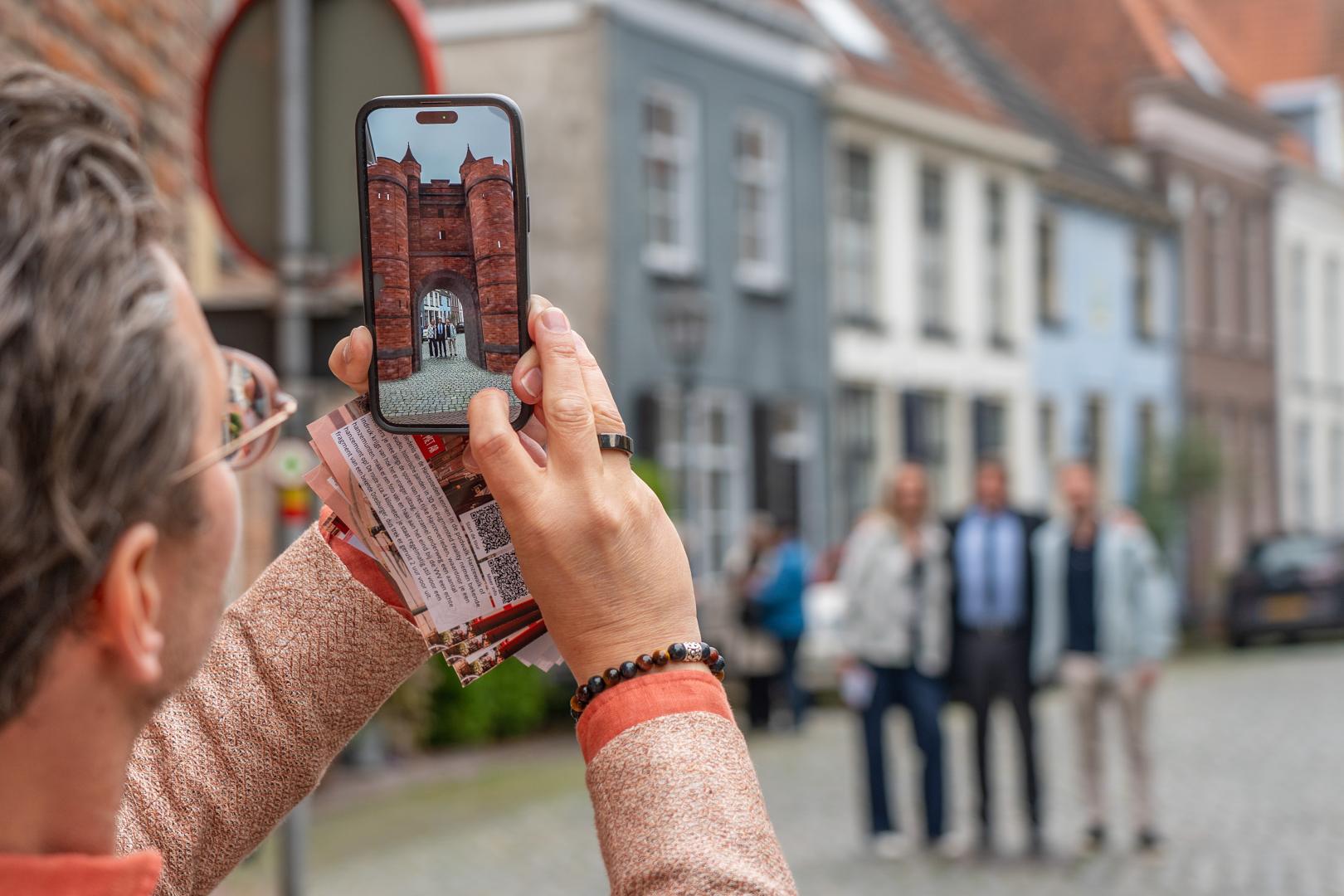
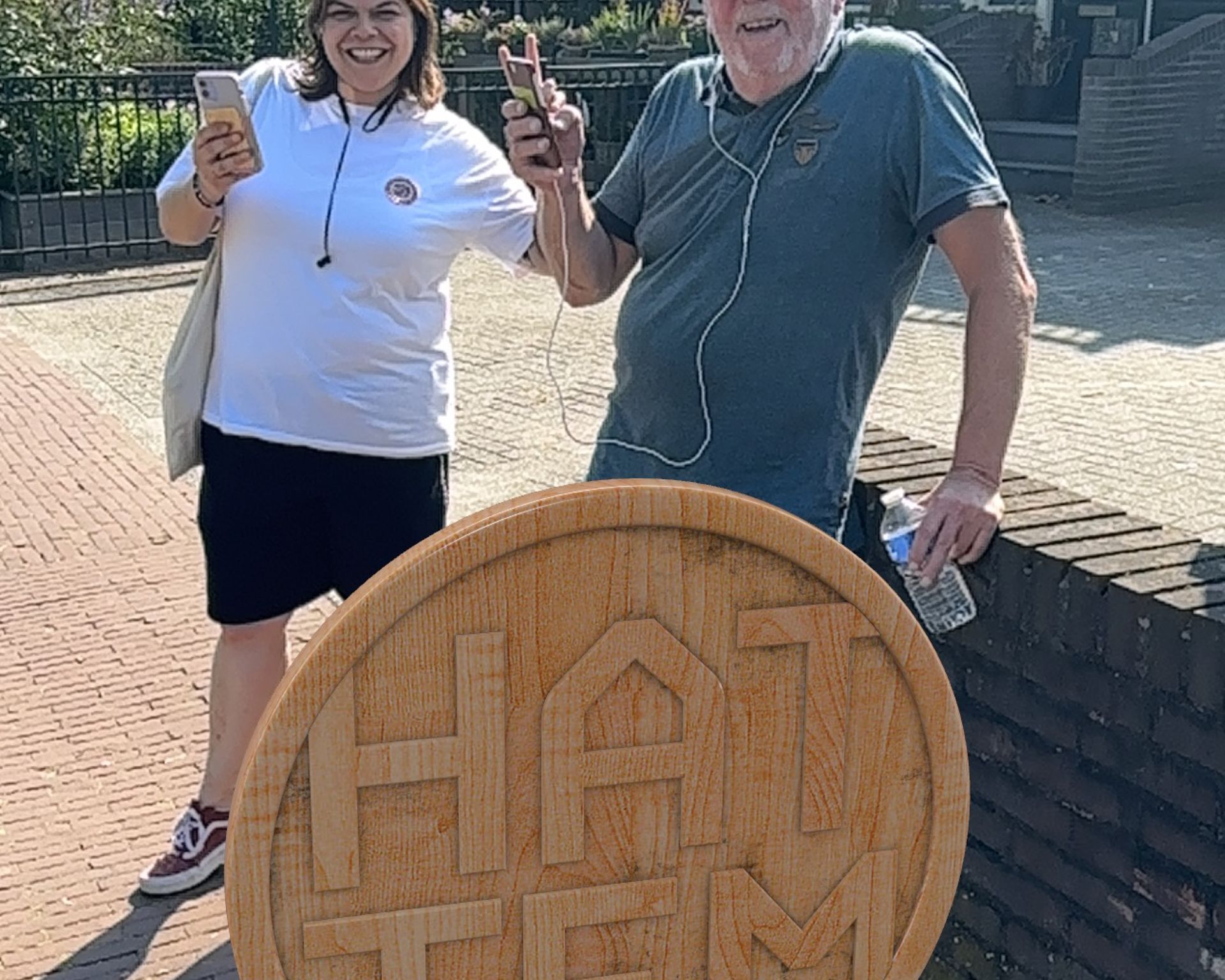
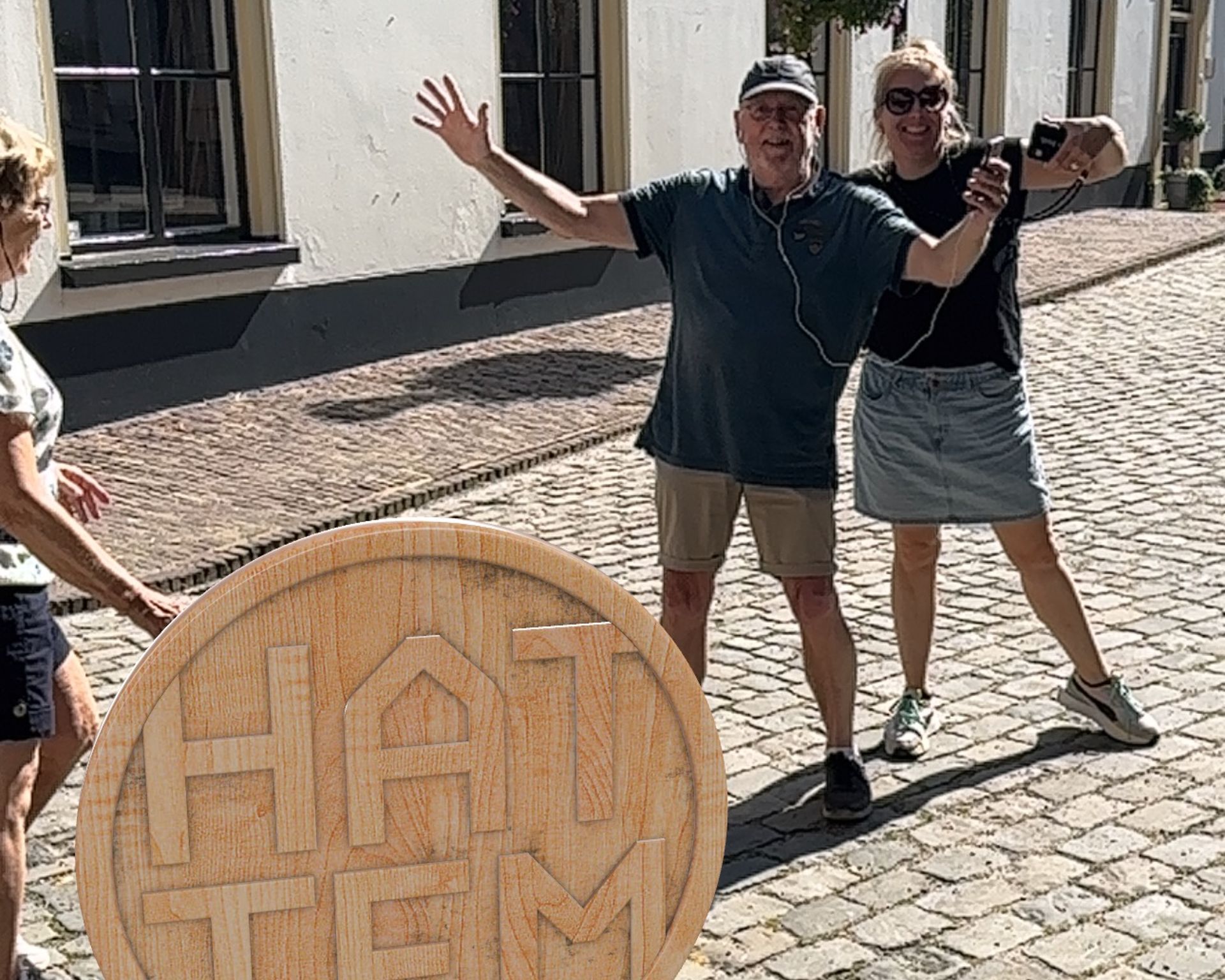
Some of the Hanseatic past no longer stands. At points along each route, visitors can place historic buildings back on their original spot in augmented reality, then walk around them and see how big they were and how they once looked — all through the camera of their phone.
In one city you can raise a burned-down church tower back into the skyline, once the tallest in the country. In another, a medieval crane returns to the old harbour. It's a way to make what was lost tangible again, exactly where it belongs.
Collecting the hidden Hanze coins
The walk has a game built into it. Hanze coins are hidden along the route for visitors to find and collect, and each 3D coin can be explored up close in augmented reality. Collect them all, and you're rewarded with a real Hanze coin at the city's tourist office — good for a discount at local gift shops, bars, and restaurants. It's a small loop that rewards finishing the walk, and it gives local entrepreneurs a direct reason to take part.
Built to grow, city by city
The Hanze Walk of Fame is a web application built on the Mediaguide platform. That foundation matters here: the Hanseatic League was never one city but a network of around 200 across Europe, and this is a living project. New cities, routes, languages, and stories can be added on the same platform, so the walk keeps growing without starting over each time.
A new way to walk, and a reason to stay
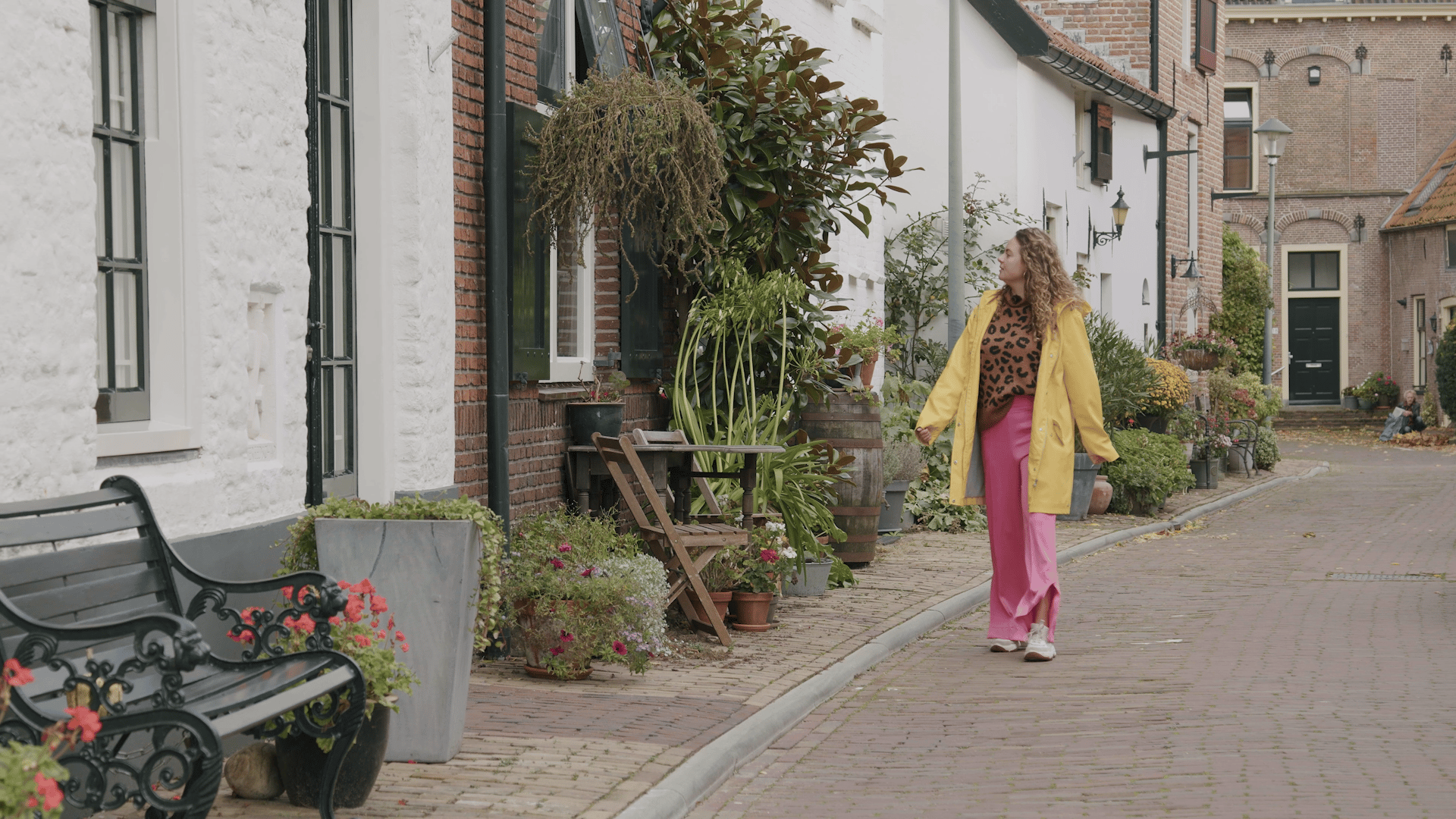
The Hanze Walk of Fame has proven its value for visitors and cities alike. It's a new way to explore and understand the rich history of the Hanseatic cities, and the link with local entrepreneurs has worked: the coins draw visitors into restaurants, bars, and shops, and give the cities a fresh way to reach a younger audience.
The Hanze Walk of Fame is a strong product that lets you experience the city in a different way. The interactive walk feels very of its time and gives Visit Hattem an opportunity to attract a younger audience to the city.
Cases
Follow in the footsteps of Vincent van Gogh
- 2023
- Leisure and Tourism
- Europe