Beyond the label, into the story
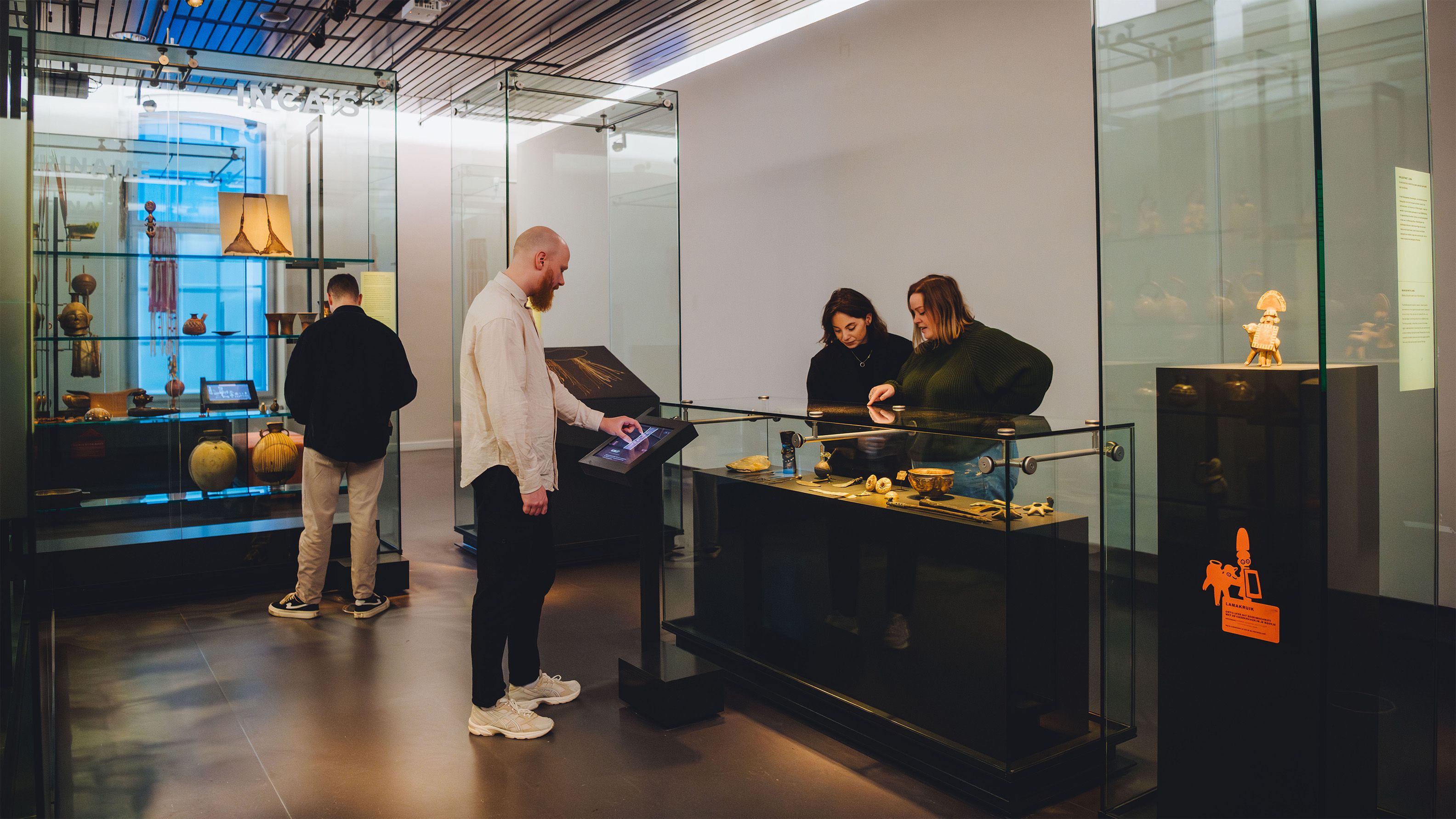
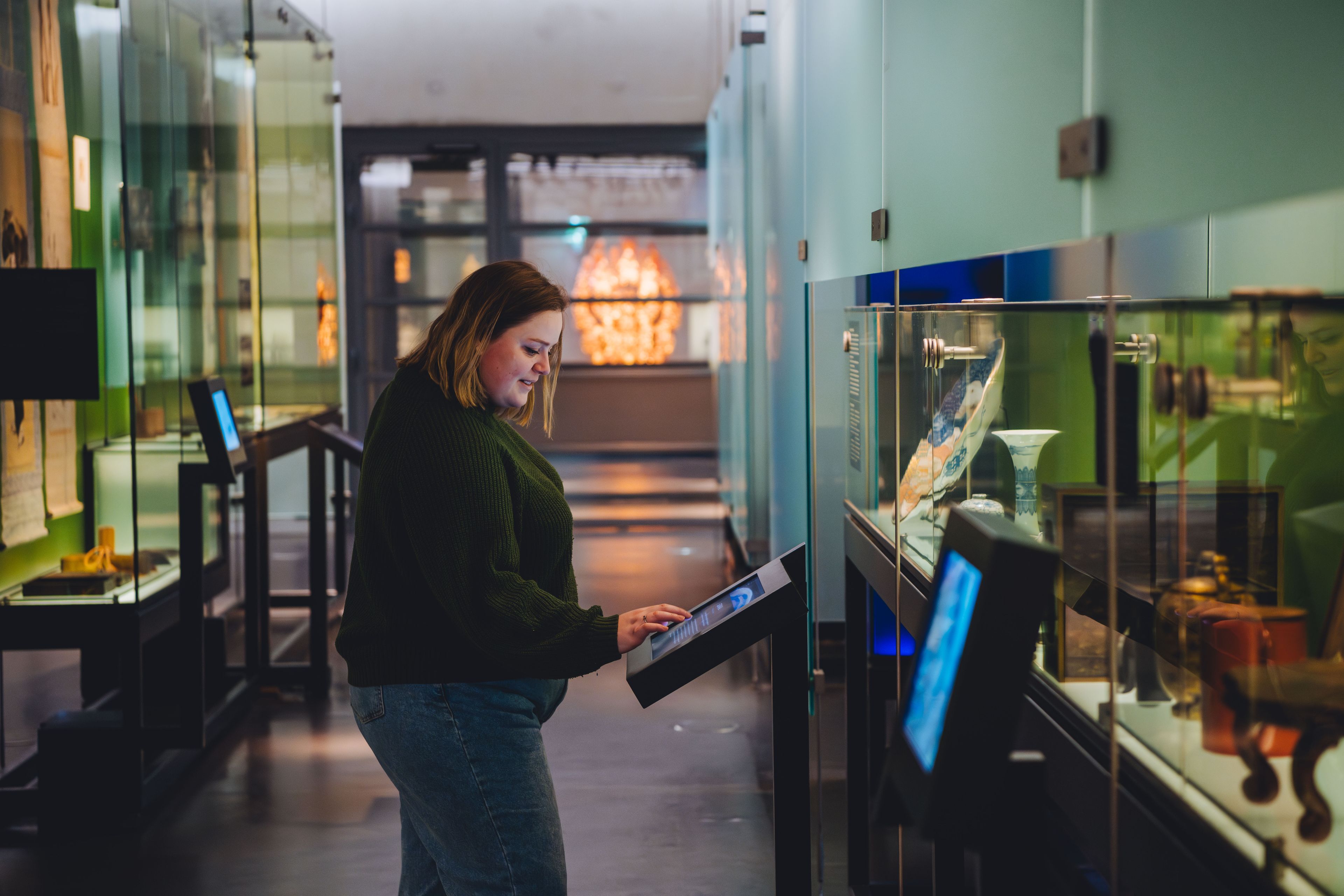
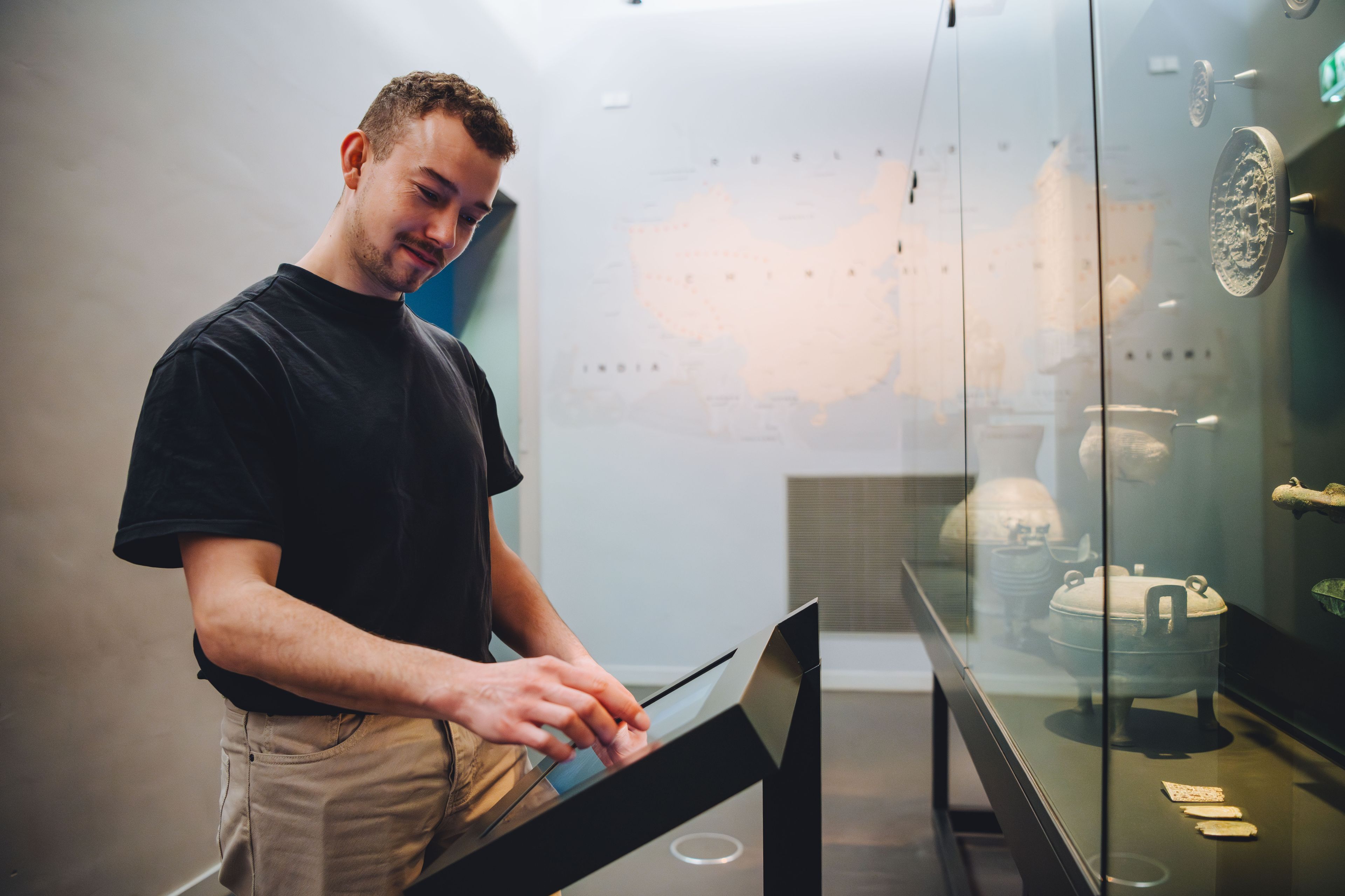
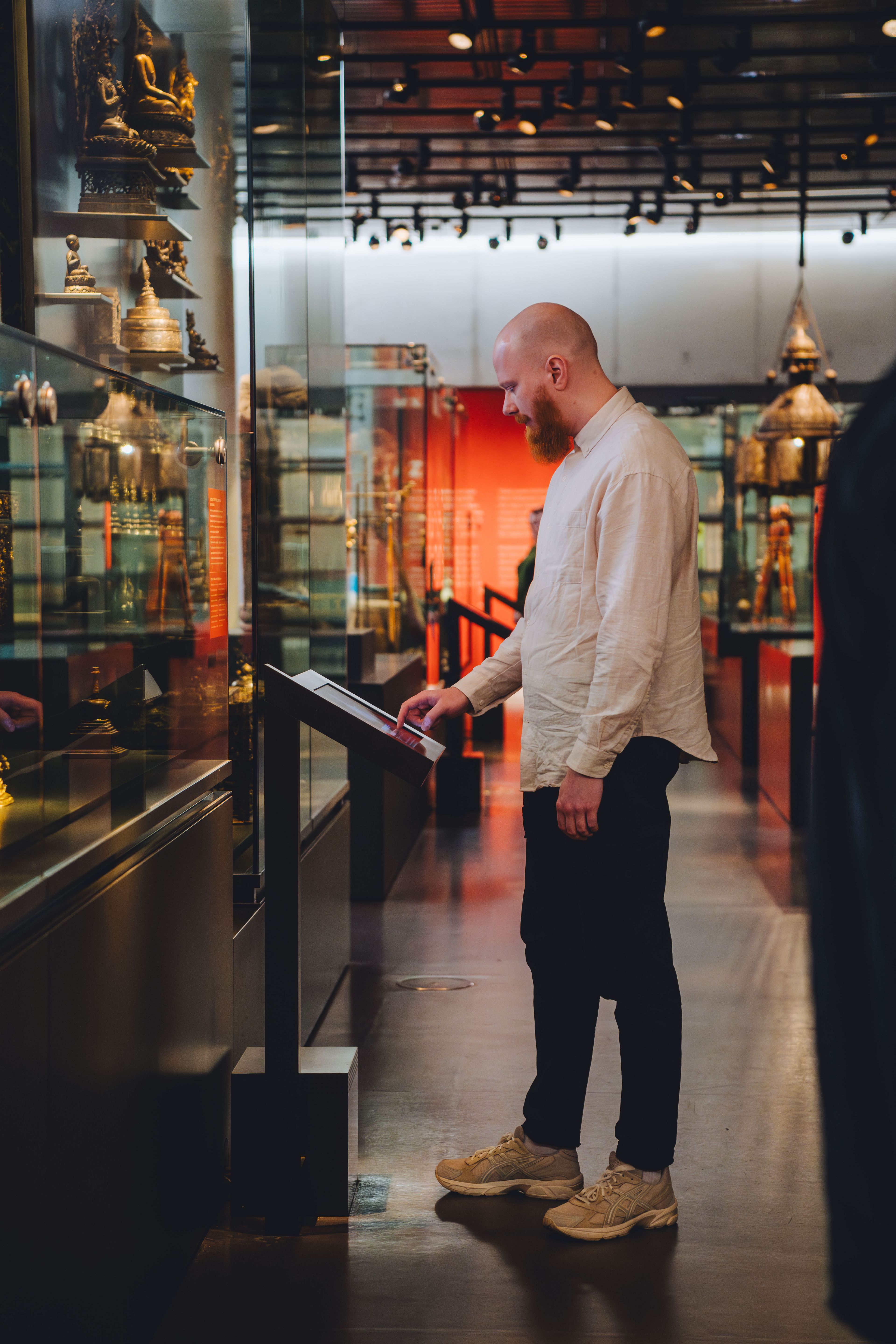
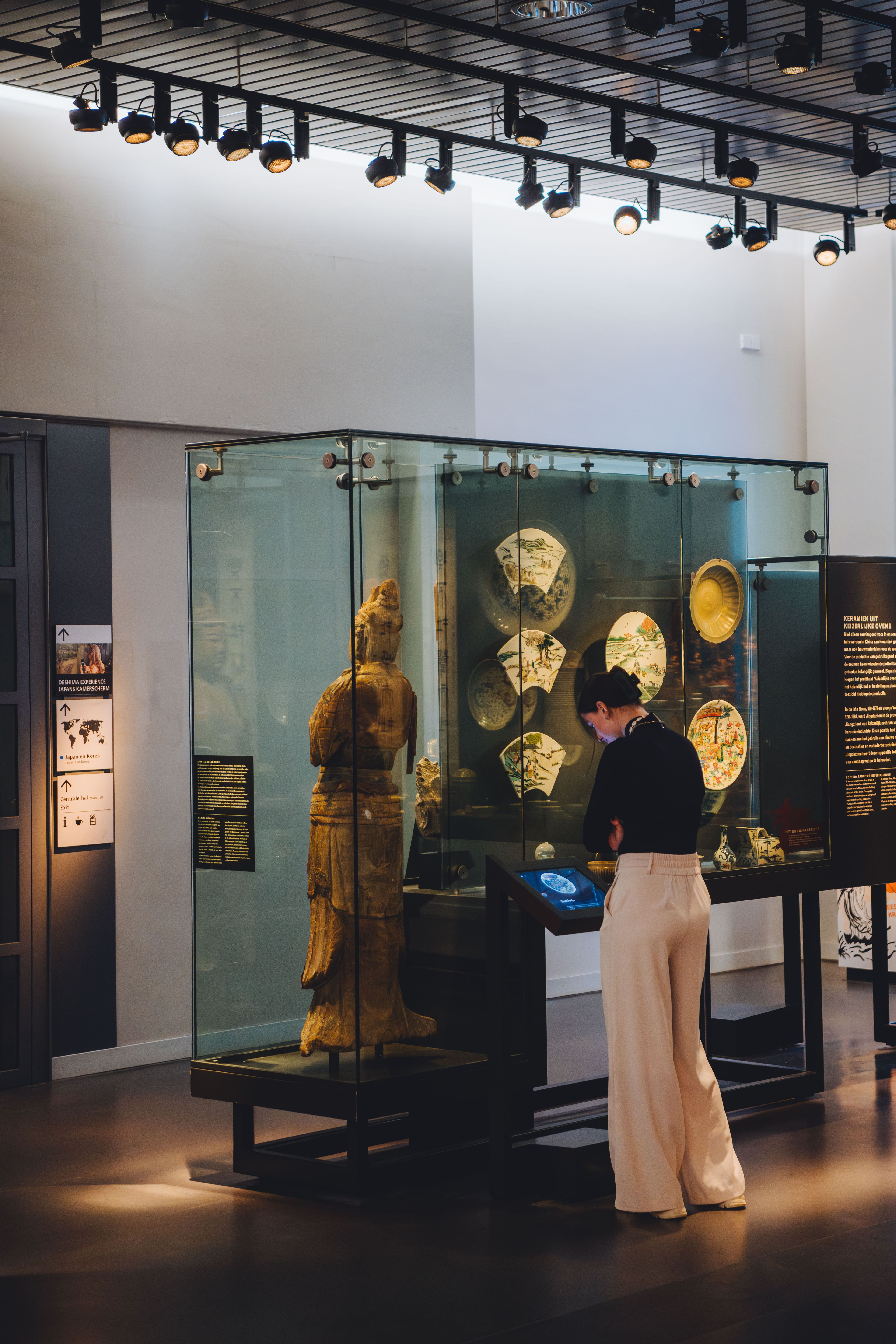
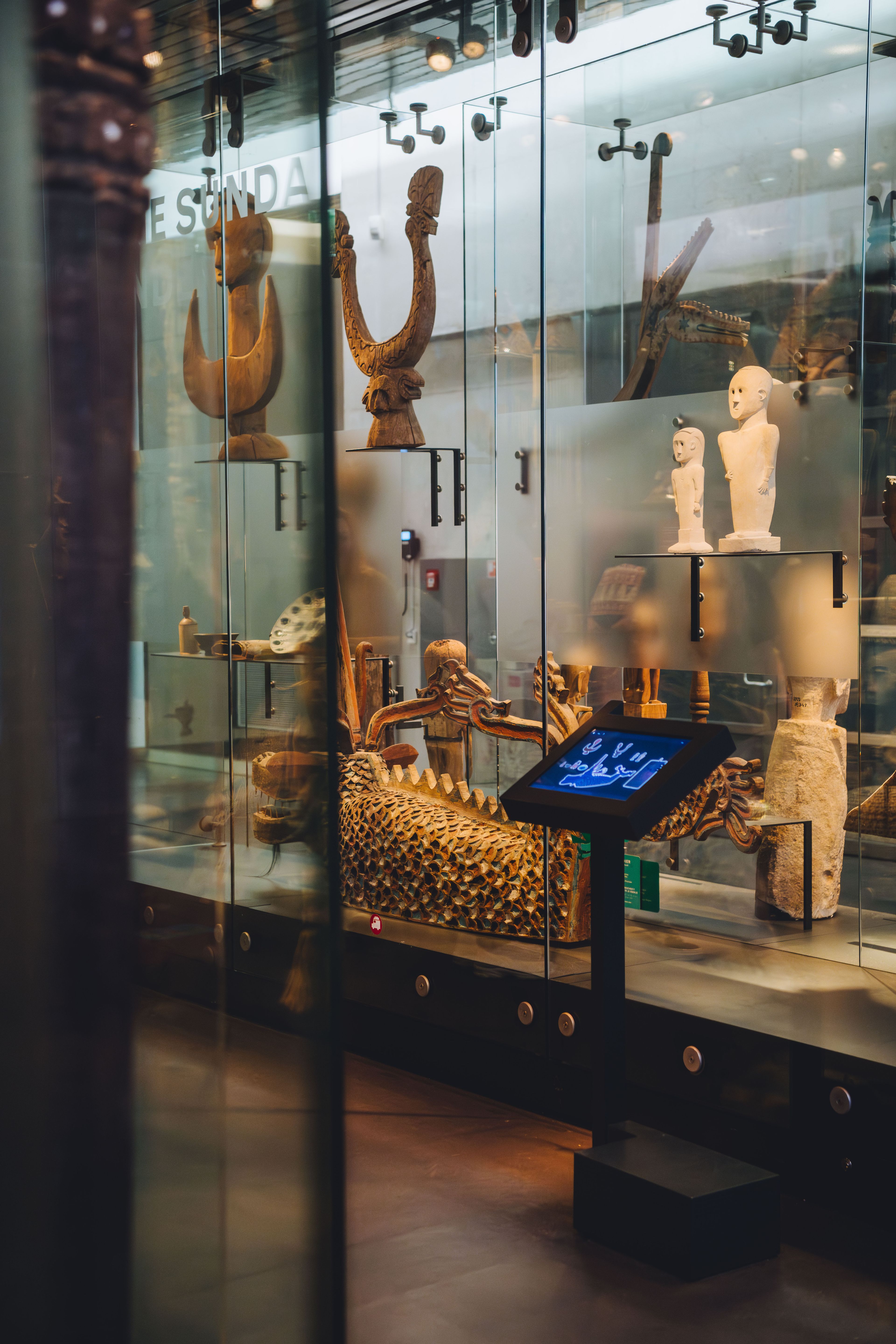
Wereldmuseum Leiden shows thousands of objects in dense, packed display cases — with no room for a printed label beside a single one of them. Together with the museum, we built a digital object-labeling system across 92 touchscreens, so the story behind every object is one tap away.
What we provided
A world in one museum
Wereldmuseum Leiden is one of the oldest ethnological museums in the world. From Bali to Guatemala, from Oceania to the Arctic, from Mecca to Djenné — the main exhibition spans every continent, with objects shown in large, high-density display cases. A walk through the museum opens up your view of the world, and the idea that, despite all our differences, we are all human.
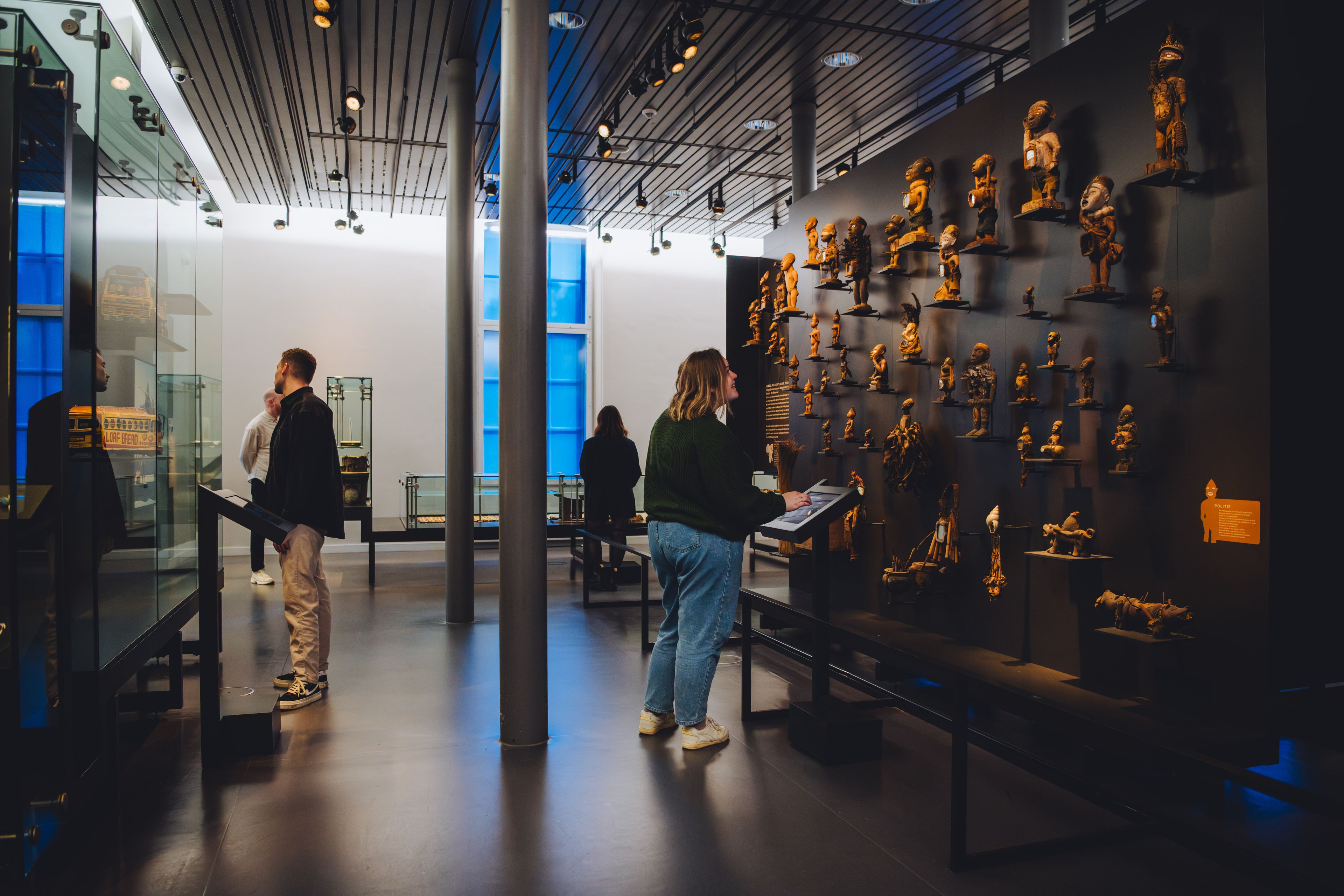
Those packed cases are part of what makes the museum feel so rich. They also leave no room for static labels. So how do you tell the story behind each object without a single printed card? That was the question the museum brought to us.
A digital twin of every display case
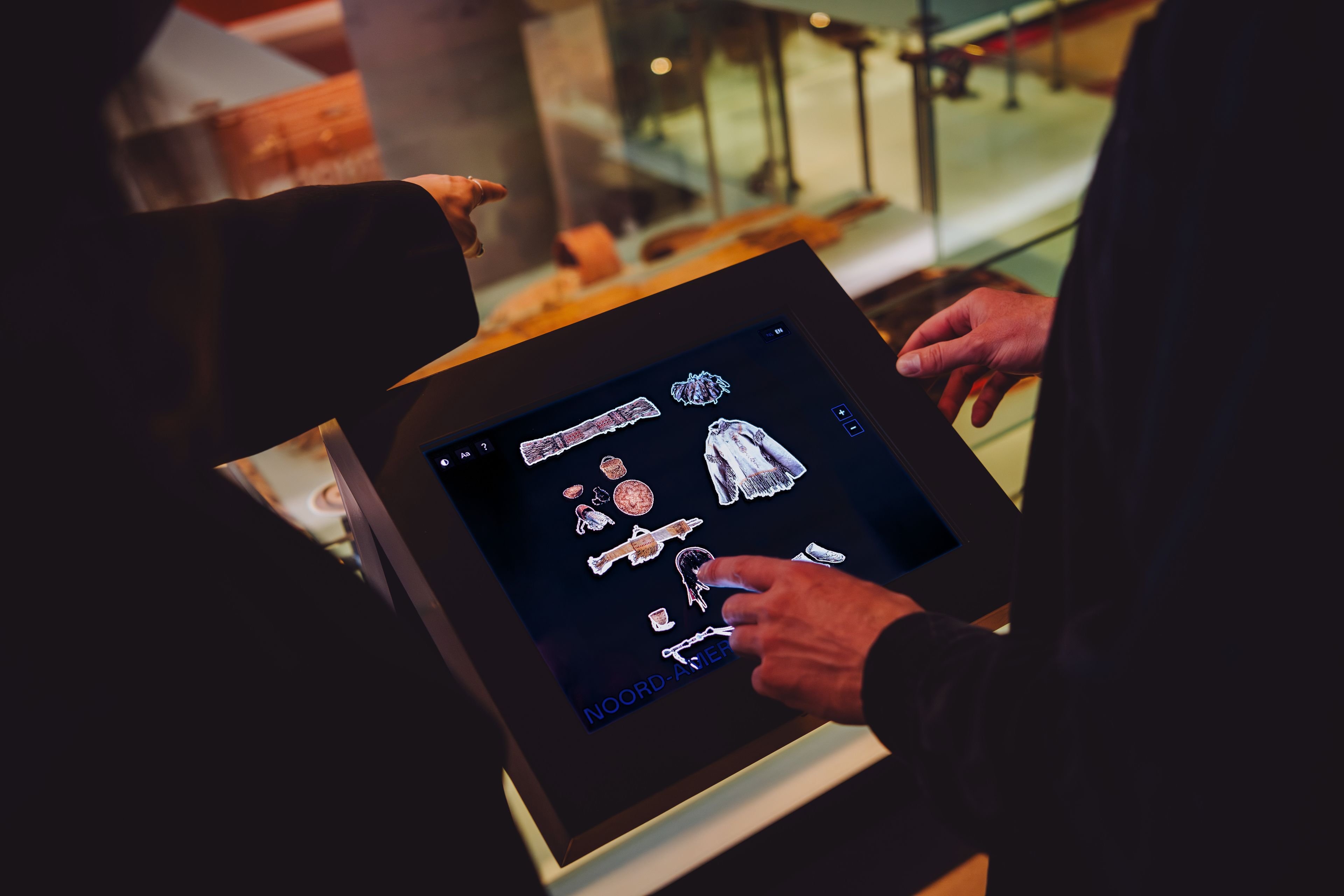
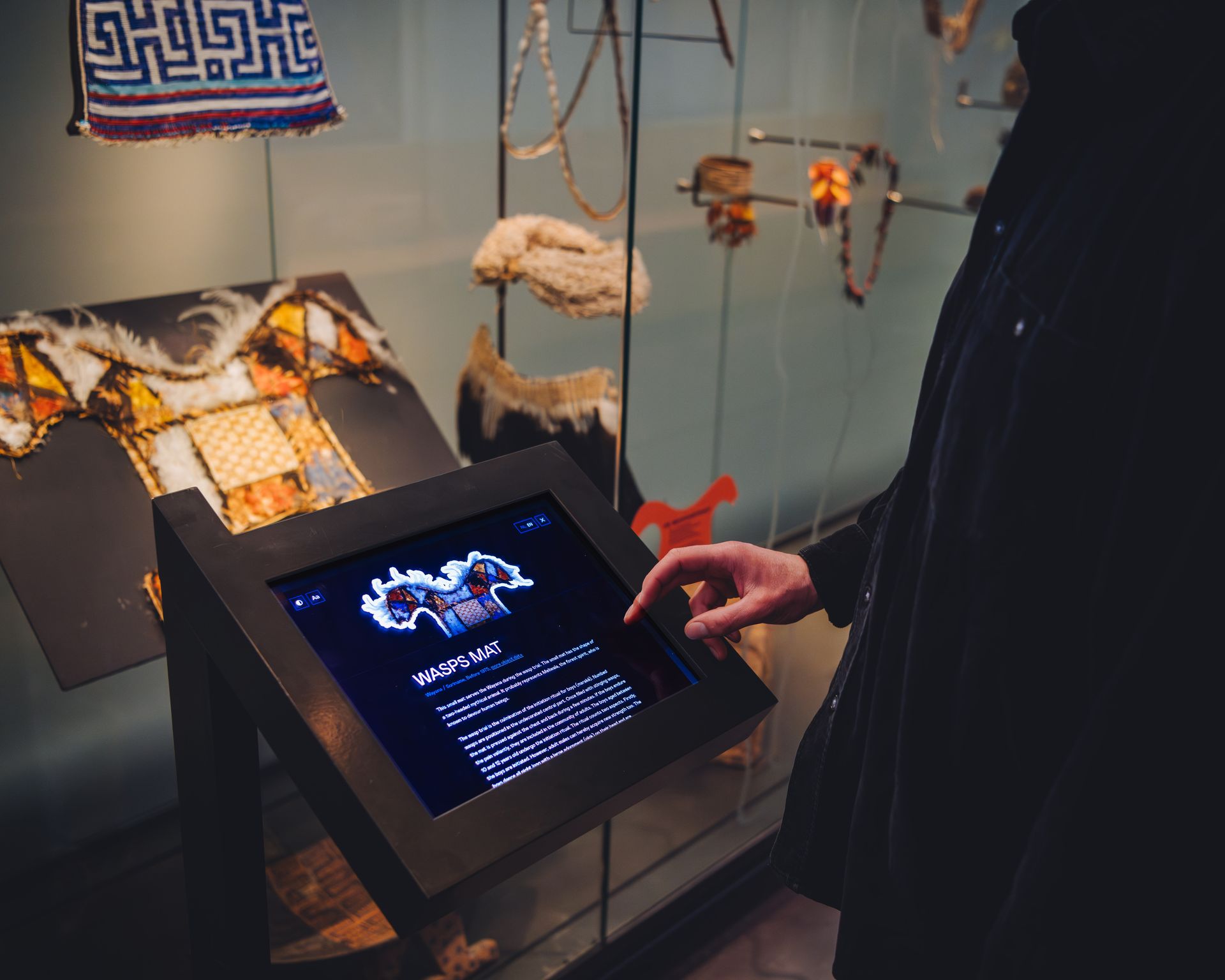
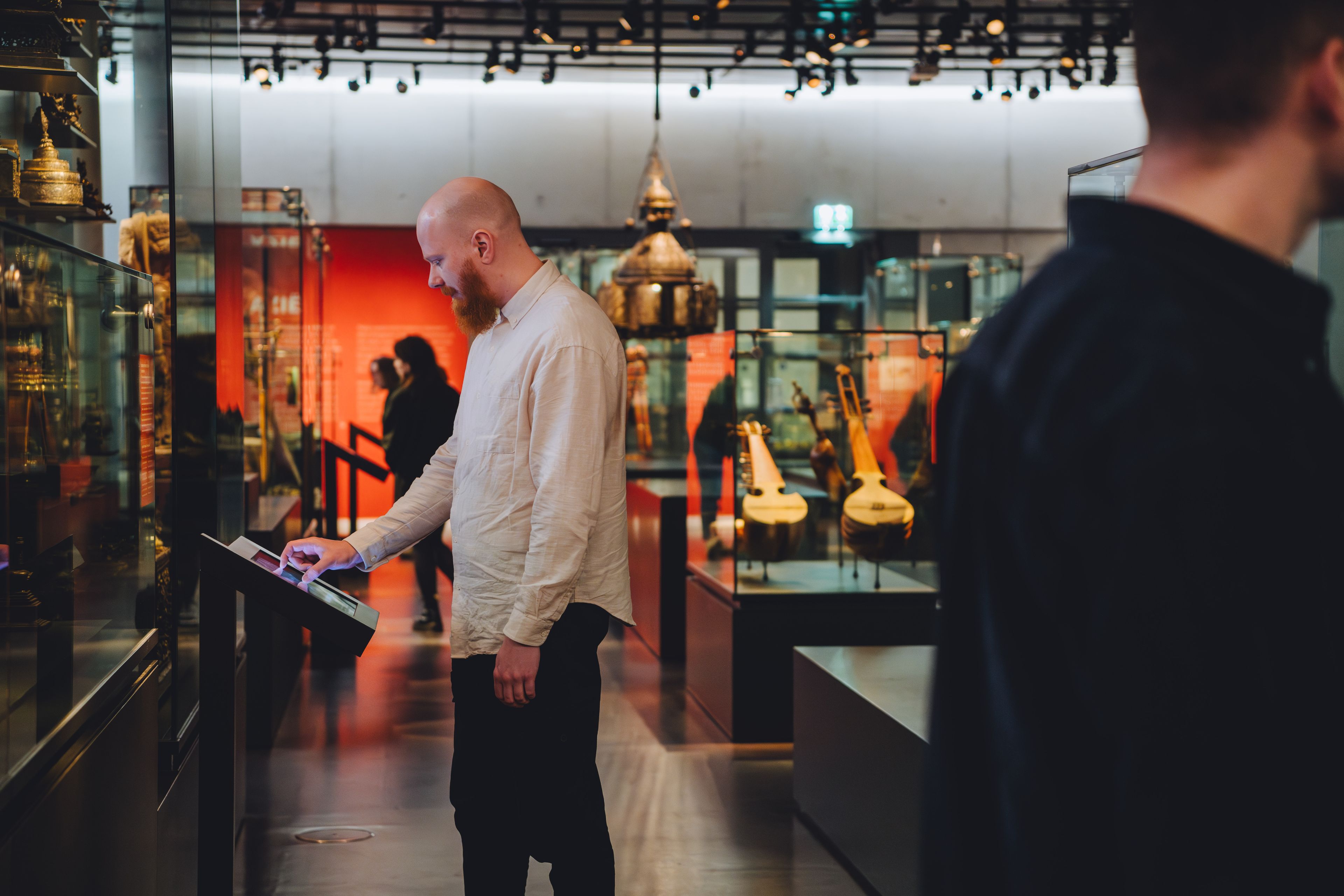
Each touchscreen shows a digital replica of the case in front of it, with every object in exactly the same position as in the museum. Visitors recognize what they're looking at right away: see an object behind the glass, find it on the screen, tap it, and the story opens. No menus to learn, no searching — the layout itself is the navigation.
Richer than any printed label
A digital label can hold far more than a printed card ever could. Stories are available in multiple languages, with content tailored to different audiences, and they go well beyond text: high-resolution images you can zoom into, video and moving imagery, and 3D scans you can turn and inspect up close. Visitors explore an object in ways a label behind glass never allows.
A mode made for kids
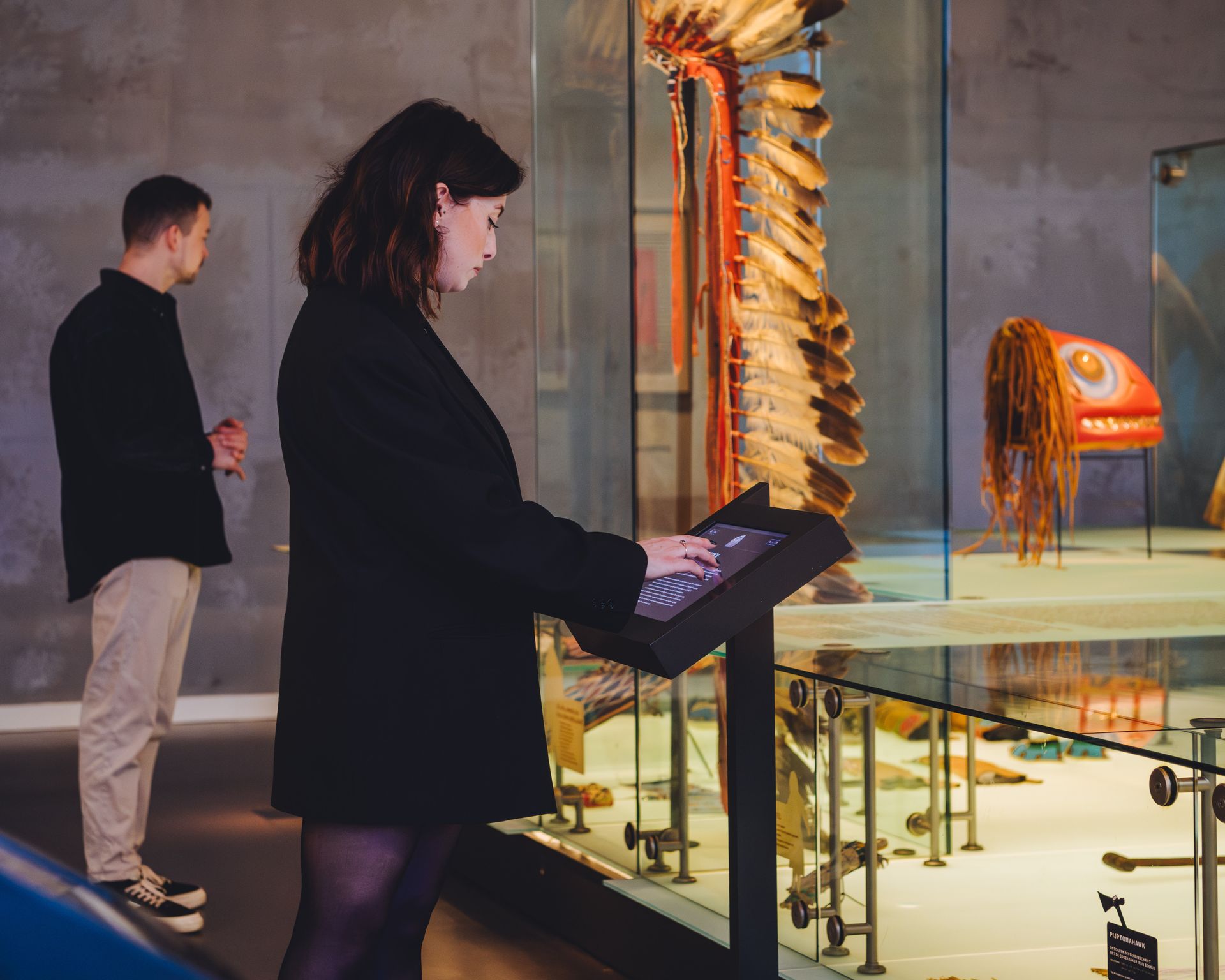
A kids mode unlocks content written for younger visitors. It connects to the museum's kids' trail, highlighting the objects along the route right on the digital displays — so children can find them, tap them, and discover their stories at their own level.
The museum stays in control
The museum manages every screen itself, through a visual drag-and-drop editor in the Content Platform by Tapart. Editors arrange objects in the digital case and reposition them whenever a display changes or an object goes off show — exactly as they see it on screen. We also built an integration with the museum's Digital Asset Management system, so editors can pull images straight from their DAM instead of re-uploading them. Less duplicate work, and one consistent source for every image.
92 screens, managed from one place
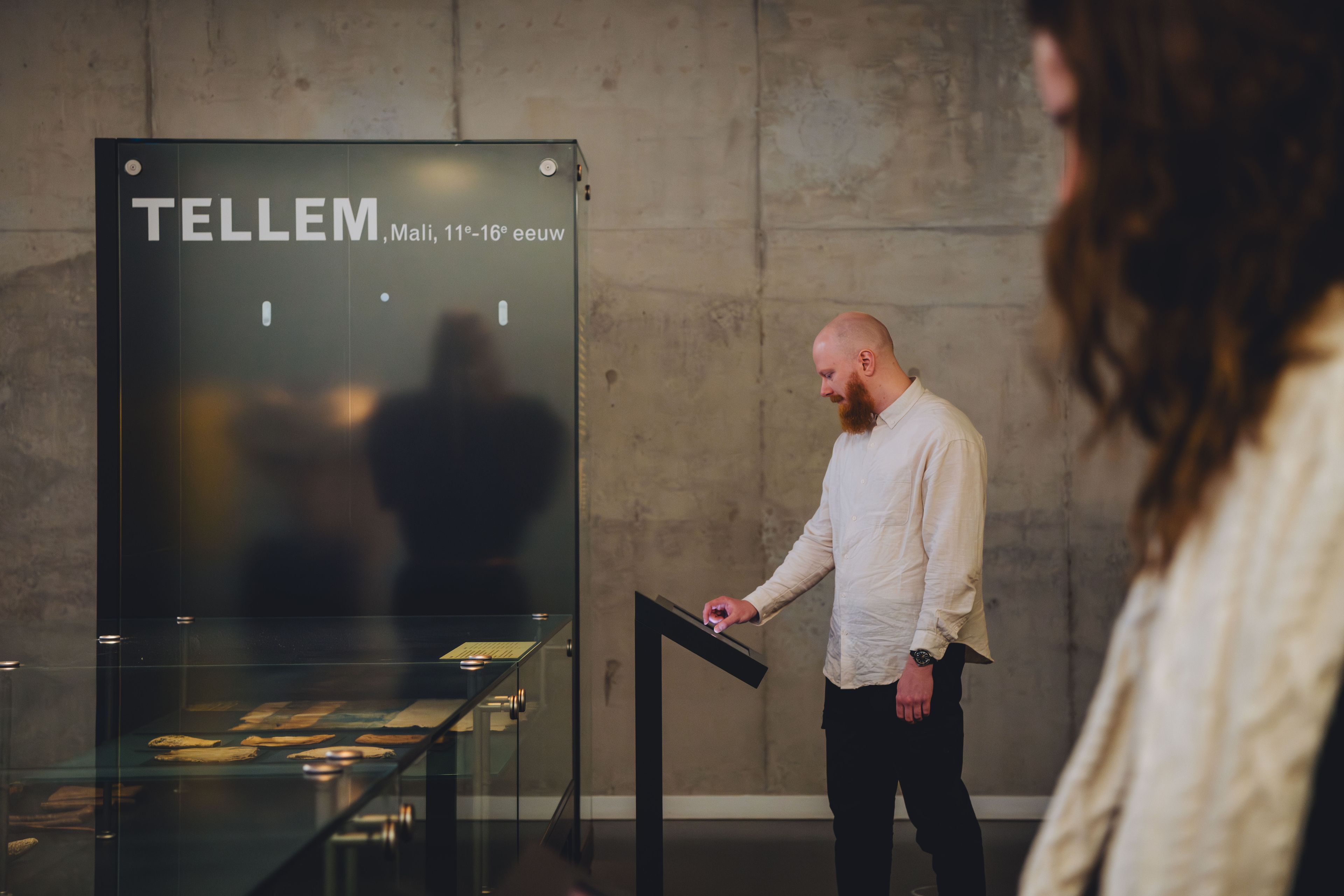
We sourced, configured, and installed 92 touchscreens, each running on a fanless industrial PC built to run all day, every day. A central server runs Experience Control, so the museum can monitor, manage, and update every screen from a single dashboard — and scale up when the displays grow. The installation runs stably in the background, leaving the team free to focus on content and storytelling instead of hardware.
A clear success for visitors and staff
The installation has proven itself for visitors and the museum team alike. Visitors engage with the displays naturally and explore the stories with ease. For the museum, the system is stable and simple to manage, giving staff more time for the work that matters: creating content and telling stories.
Tapart was a great partner to work with. The communication was clear, and the guidance was excellent. They were driven to achieve the best possible result.
Cases
Stories worth exploring
- 2023
- Museum
- Utrecht, The Netherlands
An immersive journey in the night
- 2024
- Museum
- Riyadh, Saudi Arabia
The British Museum, in your pocket
- 2022
- Museum
- London, United Kingdom